
Culture and Community with Whe Chun System
South Poultney Dojo, Poultney, VT, November 14, 2026
Here’s Your Go-To Plan for Grass-Fed Normande Beef with 5 weeknight ground beef dinner like Moxie’s Burritos, Laura’s Old-Fashioned Meatloaf, and Grama’s Scrambled Hamburger.
“The beef is better, and we know exactly where it came from.” ~Bill

What does food have to do with martial arts?
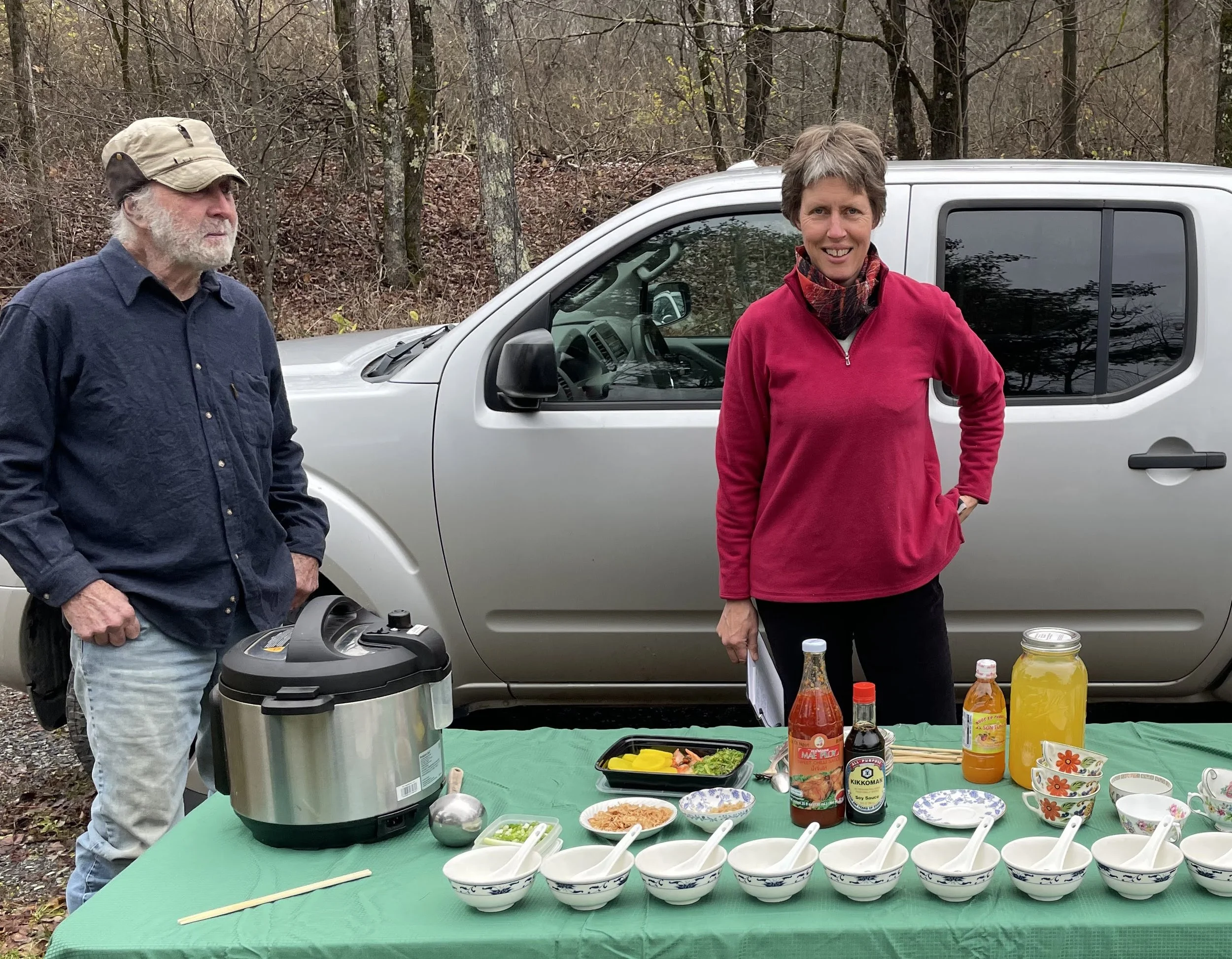
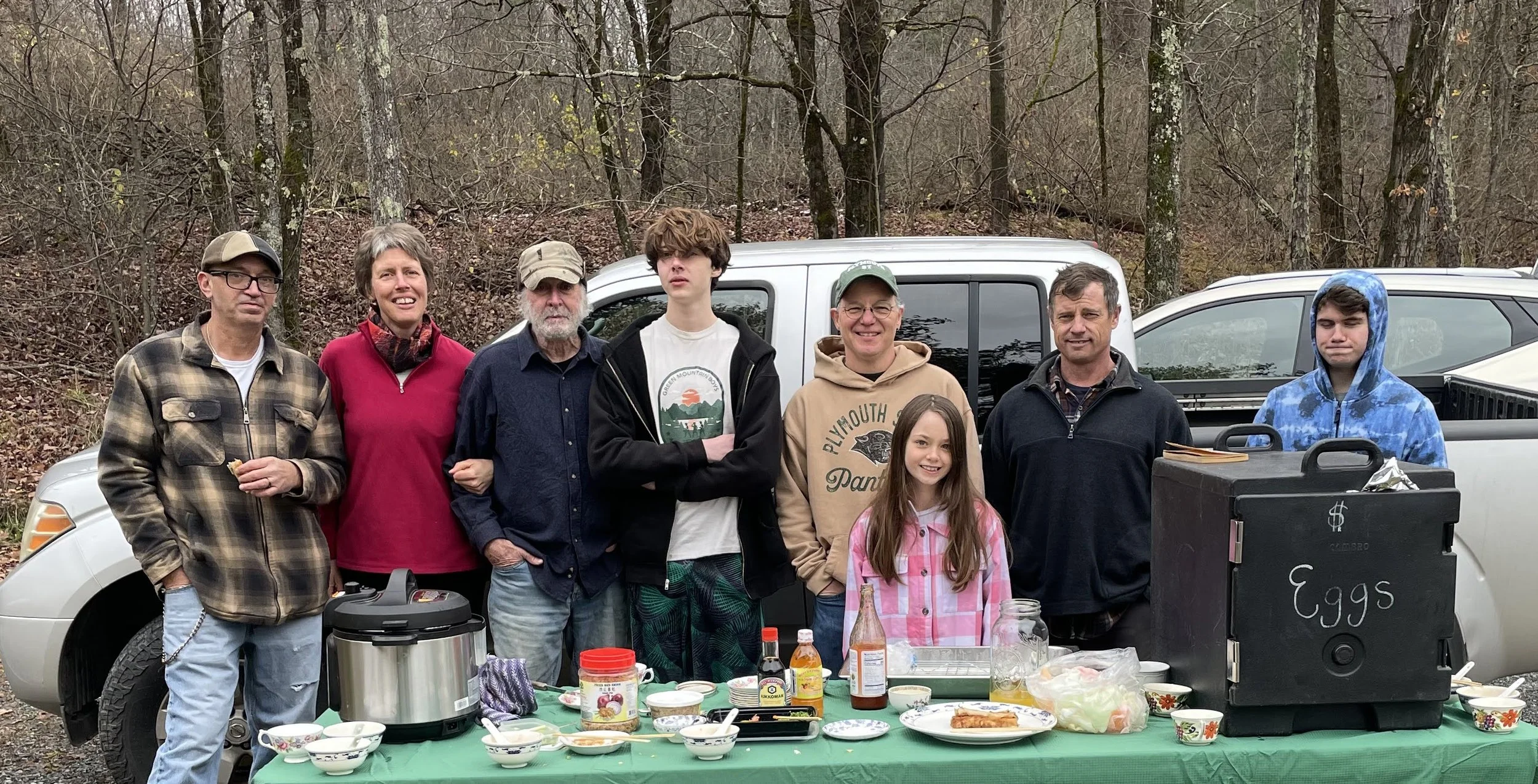
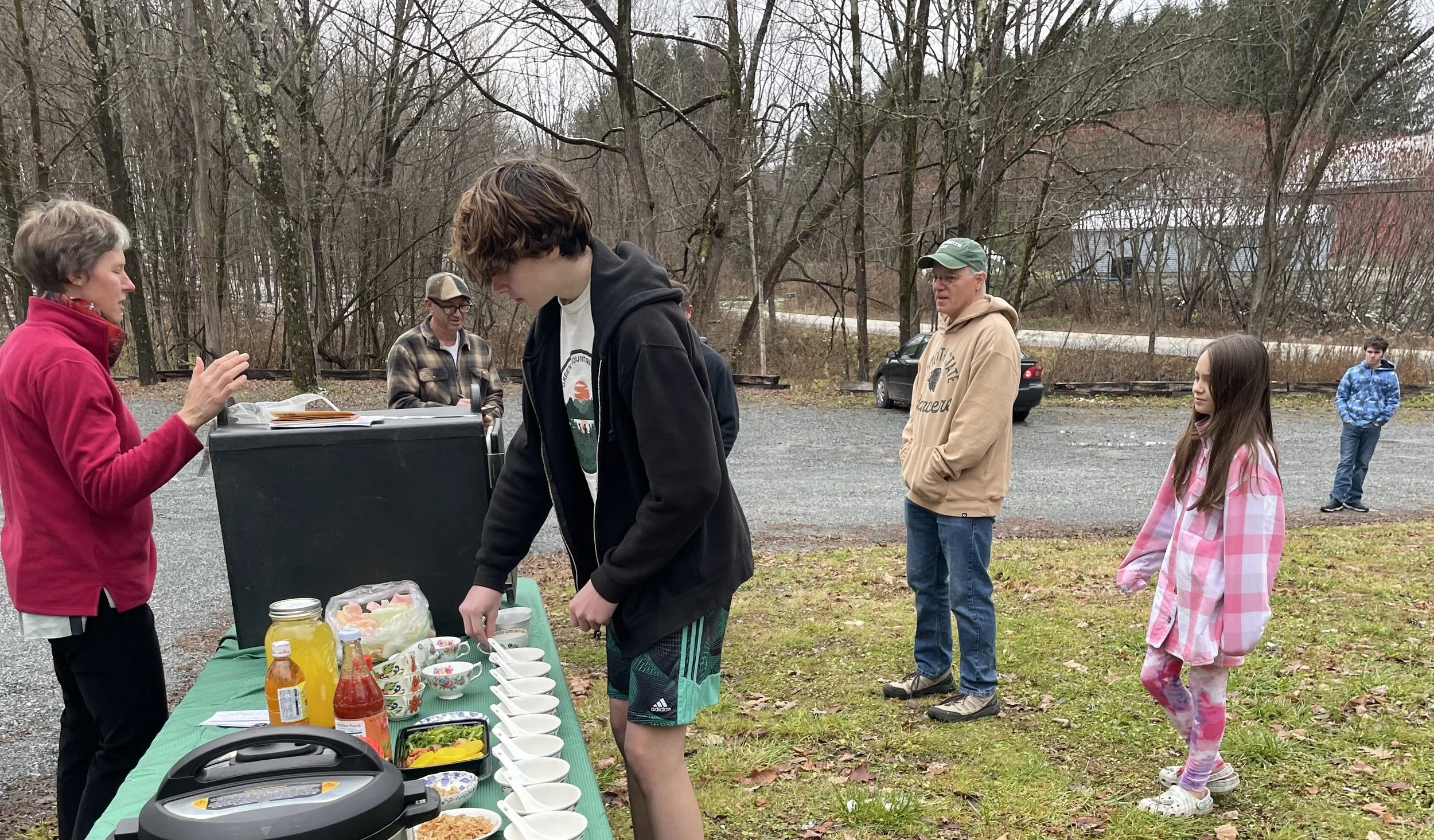
Last Saturday morning, following our workout, I shared an Asian-inspired meal with the Whe Chun Traditional Martial Arts community.
What we eat energizes our bodies; culture and tradition shape the types of foods we use and how we prepare them.
Traditional martial arts train the body, mind, and spirit.
Martial arts training doesn't end when we leave the dojo. How we feed ourselves, care for one another, and pay attention to our surroundings are all part of the practice.
Cultural foodways are another way to explore these connections.
Using the Biocultural Framework, which examines the relationships between biology, culture, and ecology, I'll share three food stories and the meal we enjoyed together (Bryant et al., 2004).
We'll explore traditional rice porridge, Filipino beef lumpia egg rolls, and passion fruit juice. We’re looking at subsistence food that provides energy, carries cultural traditions, connects communities, and reflects the environments where it grows.
Nourishment is part of training, too.
Li's Market: Discovering Ingredients and Food Traditions
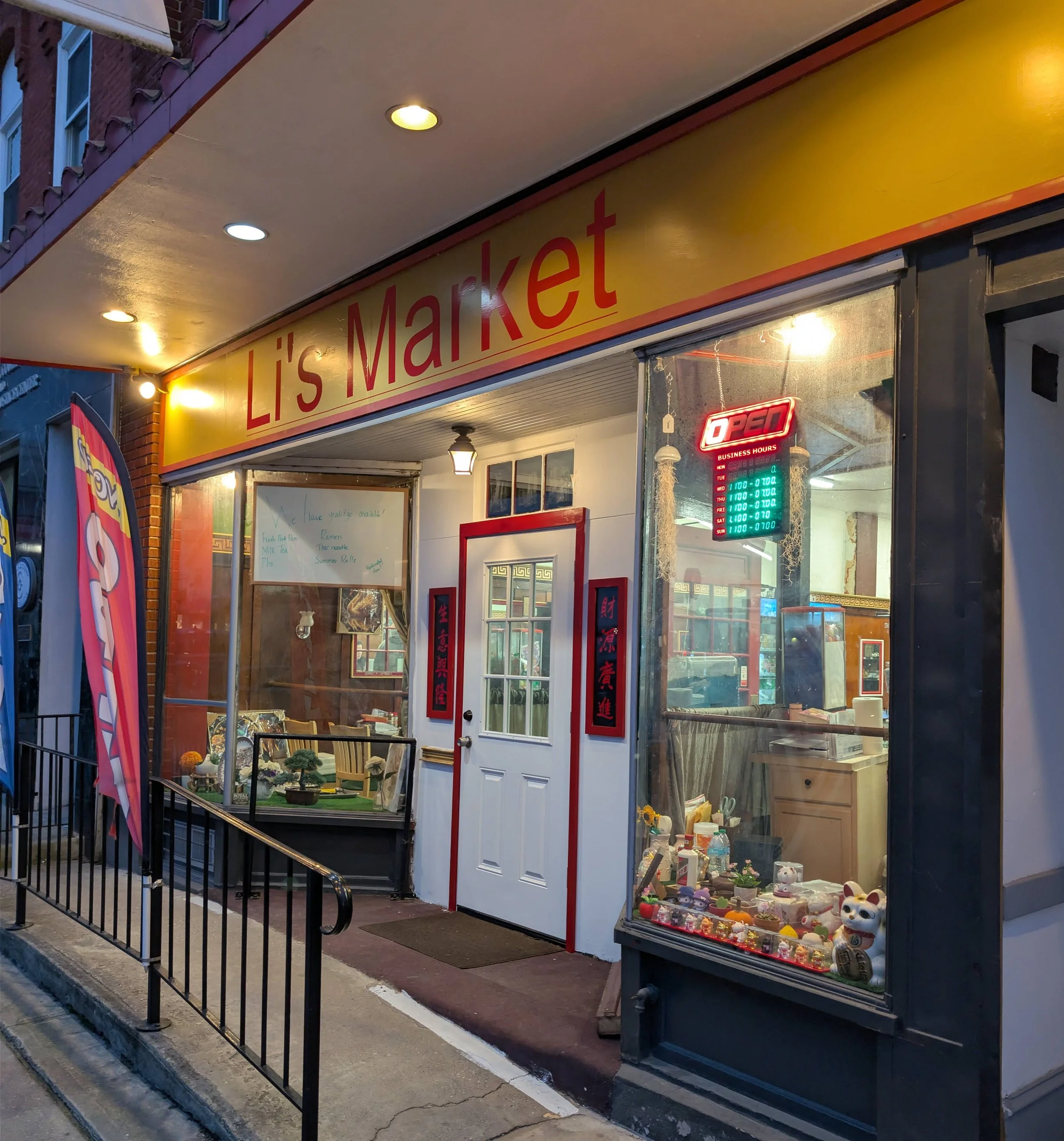
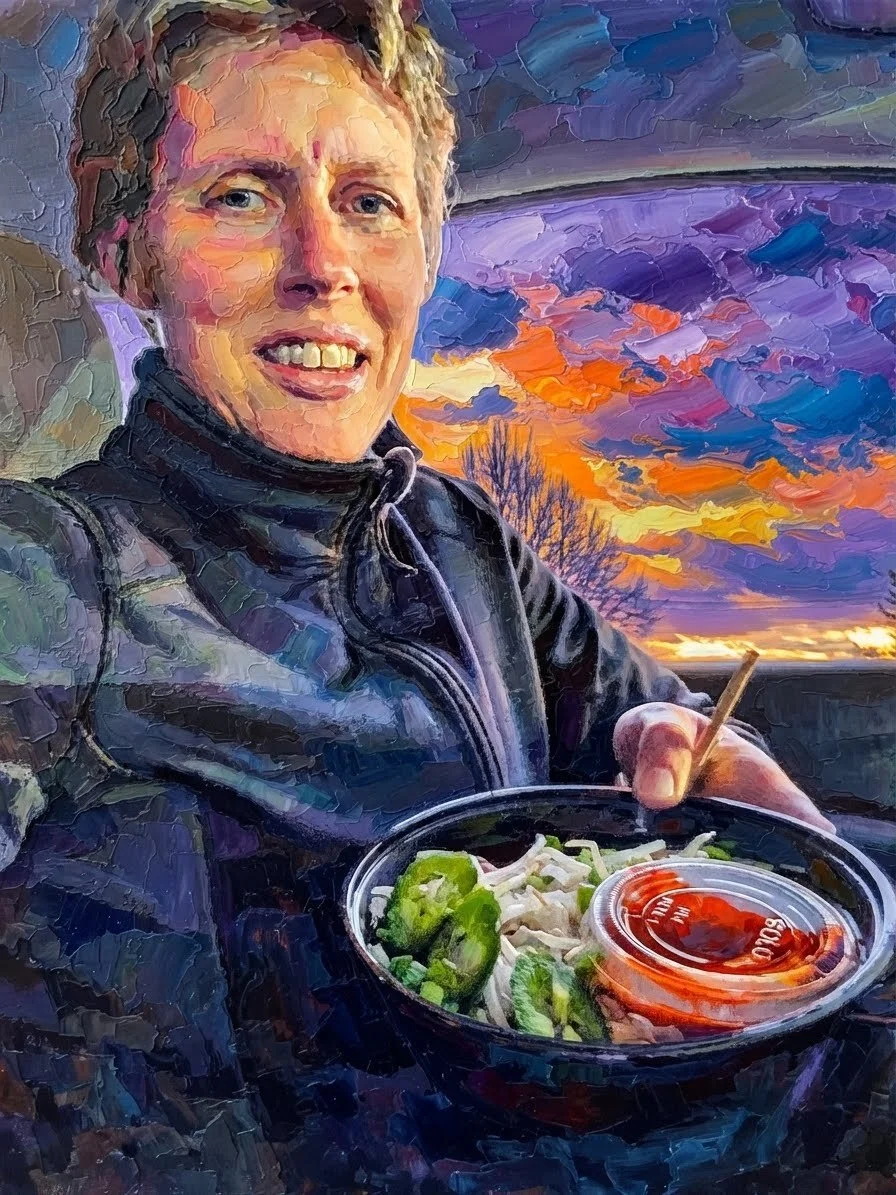
Starting out, I made it over to Li’s Market at 48 Center Street in Rutland on a tip from their son Ryan, who is in my Anatomy & Physiology class at Castleton-VSU. After shopping, I got takeout: delicious Pho for dinner. It was my first time in the store, and I was treated really well. Li’s Market helped me with authentic ingredients and knowledge for my recipes to come out right.
Food and Martial Arts:
Nourishment Beyond the Dojo
Sensei references Master Shi Heng Yi of the Shaolin Temple in Europe on his members’ page to teach us about ‘letting go’. We use stories like this to help us watch our breath to quiet our minds during meditation (Bergen, n.d.).
Communal residential martial arts communities like the Shaolin Temple of Europe prepare shared meals at strictly scheduled times (8 AM, 1 PM, 6 PM) and they clean up together. Meditative silence is kept while eating, too (Shaolin Temple Europe, n.d.).
What are your traditions and food practices?
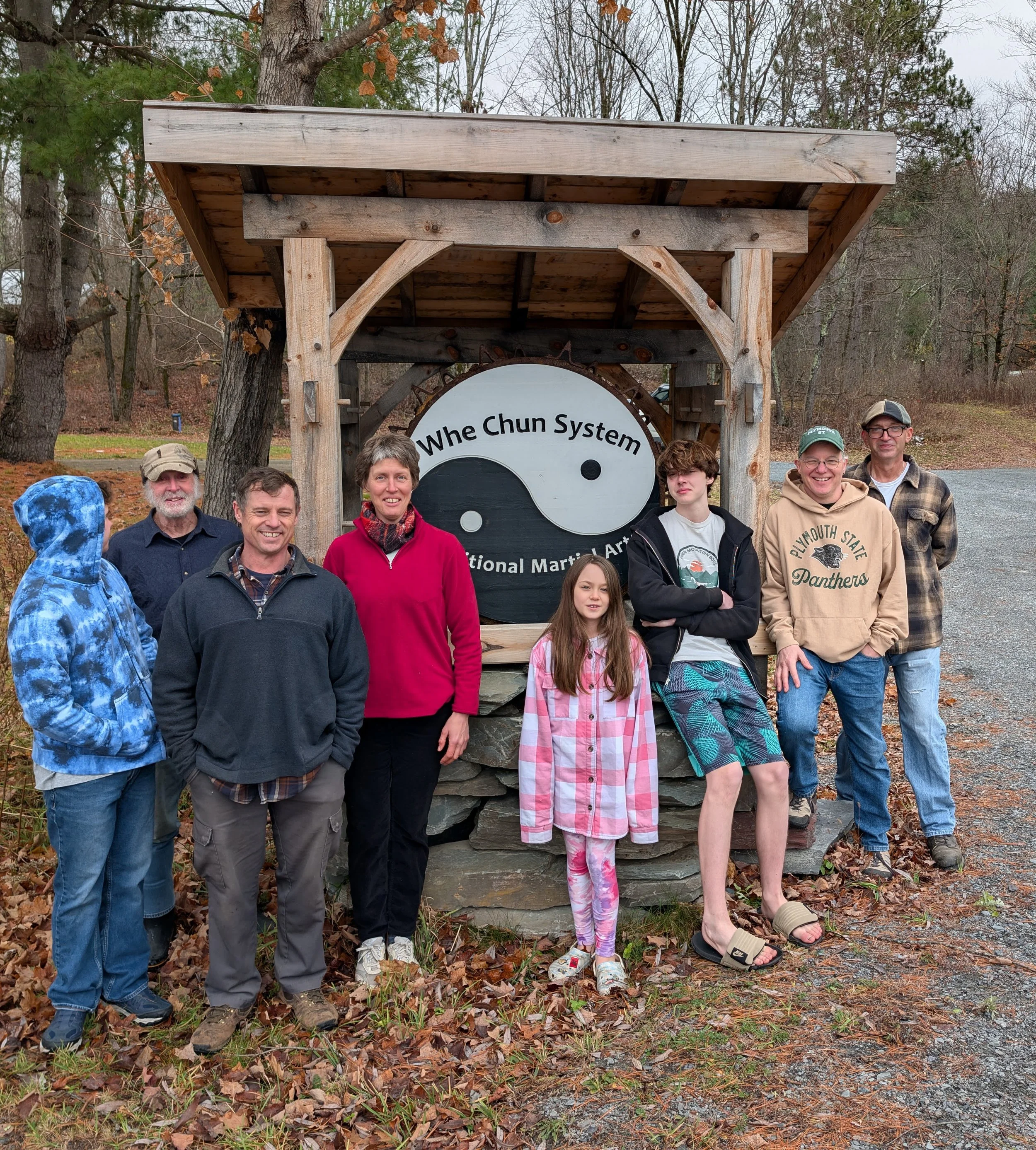
History of Our System’s Cultural Development And Connecting It to our community
Master Renfrow, who is Master Bergen's Sensei, grew up in a similar residential training place in Mongolia, where he trained in the Chou Con Di system, which translates to Grace, Power, and Mind Control (Bergen, n.d.).
Whe Chun system is a non-residential community matching our American culture where we share parts of our lives communally. Working out, providing instruction, weeding the sand garden, cleaning the floor, and bringing in wood are more than chores we do together. They represent communal actions of caring for and being cared for by each other.
It's the Whe Chun culture (Bergen, n.d.).
Where does food come from?
The recipes I’m sharing have Chinese, Taiwanese, and Vietnamese cultural traditions and include direct-source Filipino insights. We usually eat what is provided by our environment.
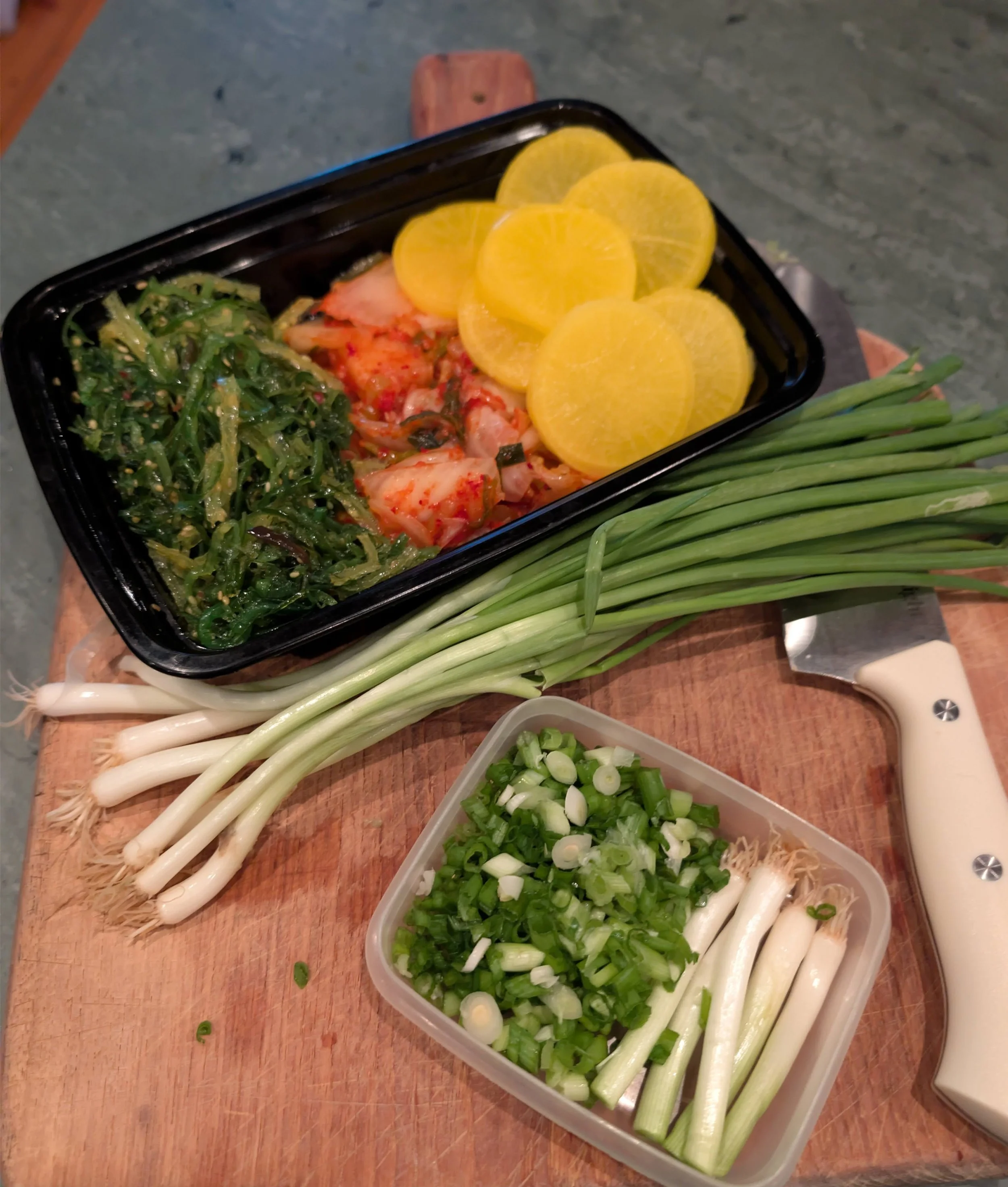
Another intersection of Biology, Culture, and Ecology
Rice and Its Role in Human Food Systems
“Today 14% of every crop pulled from the ground is a rice stalk, and if you put all the rice fields together it would make up the world’s thirteenth largest country” (OTR Food & History, 2024, 2:49).
Rice and corn are in the grass family. Like corn’s origin story in Tehuacan Valley (now Mexico) 7,000 to 10,000 years ago, rice also has an early civilization story originating in China and India between 13,500 and 9,000 years ago. First, forager communities gathered rice seeds that matured and shattered onto the ground. Then, in horticultural communities, they eventually selected for non-shattering seed gene types (OTR Food & History, 2024).
“About 12,000 years ago, a dramatic change in the way humans acquired their food began to unfold, including in Southeast Asia and China. We consider this a major cultural revolution because of its important long-term impact on how humans interact with their environment.” (Bryant, 2004, p. 48).
How Rice Plants Survive Underwater
Rice plants can survive underwater because their “snorkel” roots develop tiny air channels called aerenchyma (pronounced air-en-KY-ma). When flooded, the plant creates more of these channels, allowing oxygen to move through the roots even when the roots and soil are underwater (OpenAI, 2026) (Yamauchi et al., 2015).
Our Ecological Connection
Eaters are opportunistic, taking advantage of foods produced by ecosystems like floodplains and terraced gardens for rice (Bryant 2004). Rice porridge symbolizes nourishment and traditions, biology and culture, and the connection to landscape and ecology. Both rice and our bodies are connected biologically. The sun provides energy for rice, and rice provides us with carbohydrates. Our skeletal muscles move our bodies during exercise in response to signals from the nervous system (Betts et al., 2013).
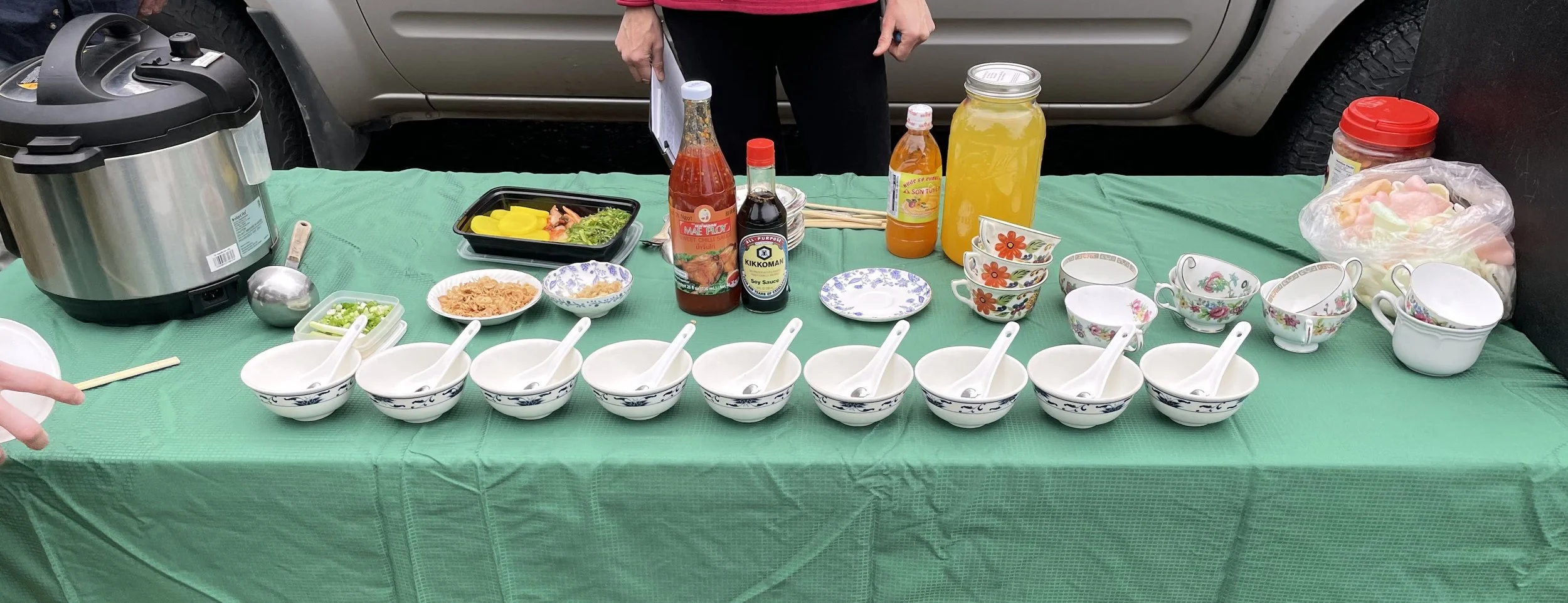
Rice porridge, Zhou or Congee (Mandarin /Chinese), Jook (Korea)
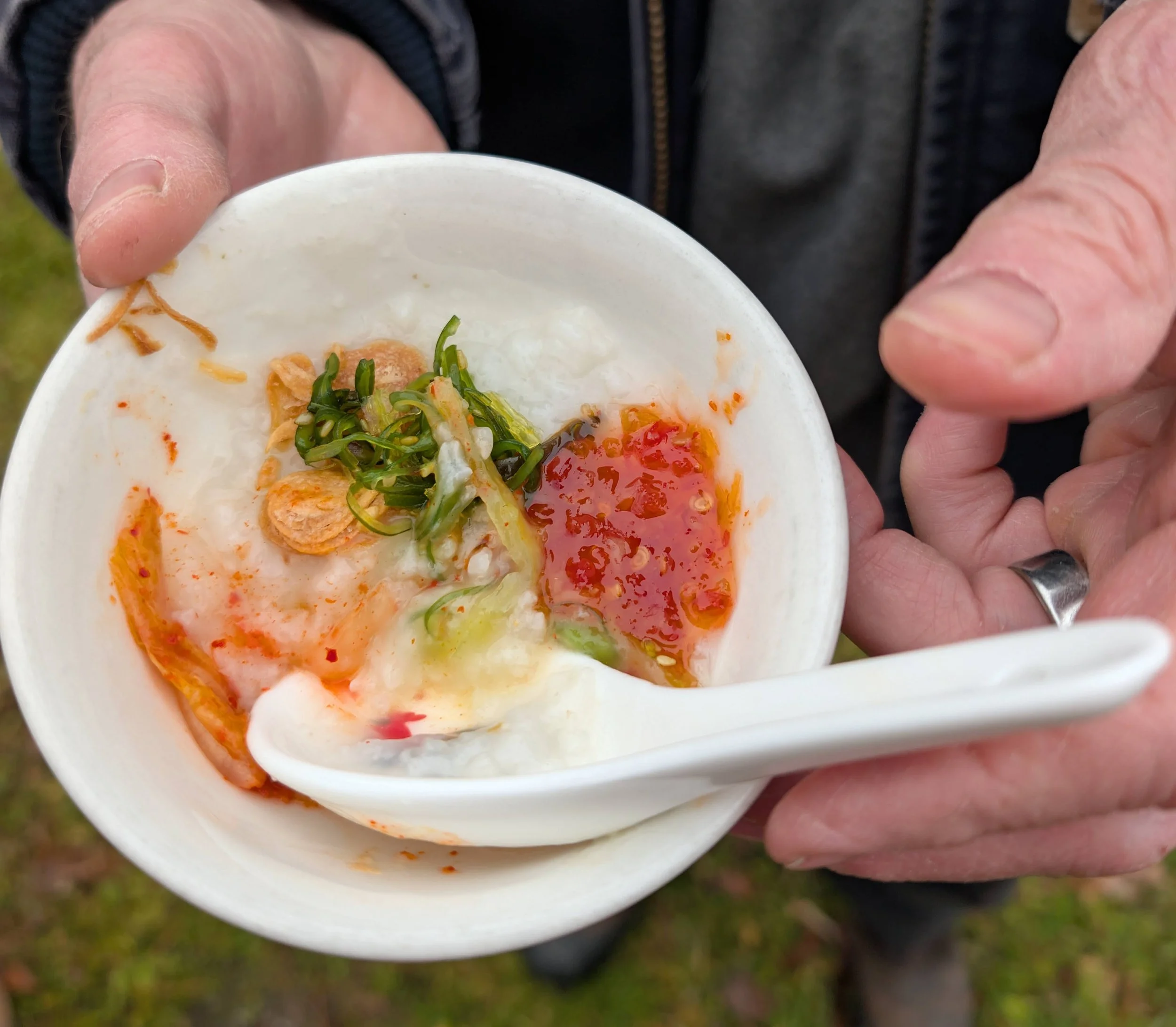
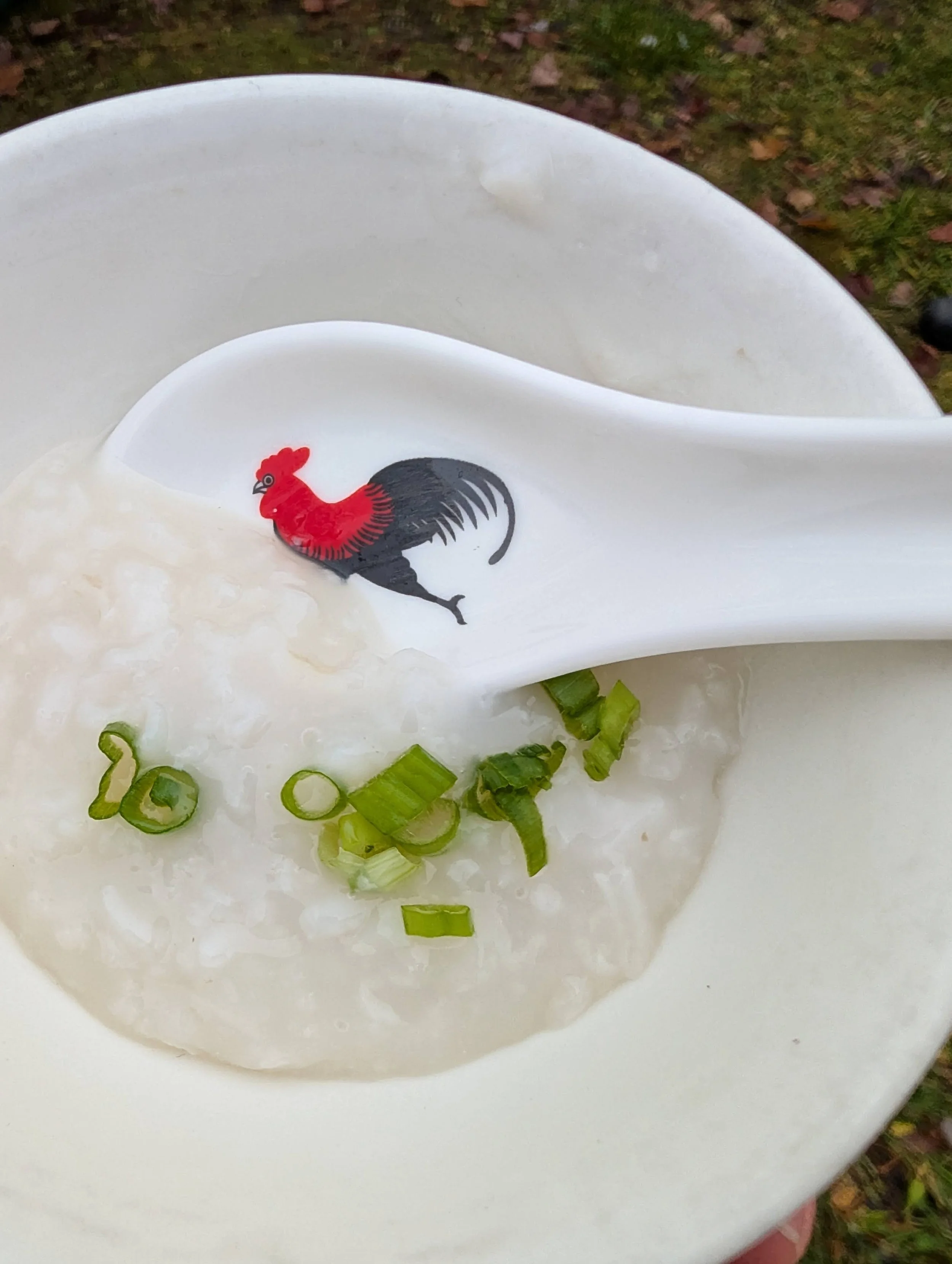
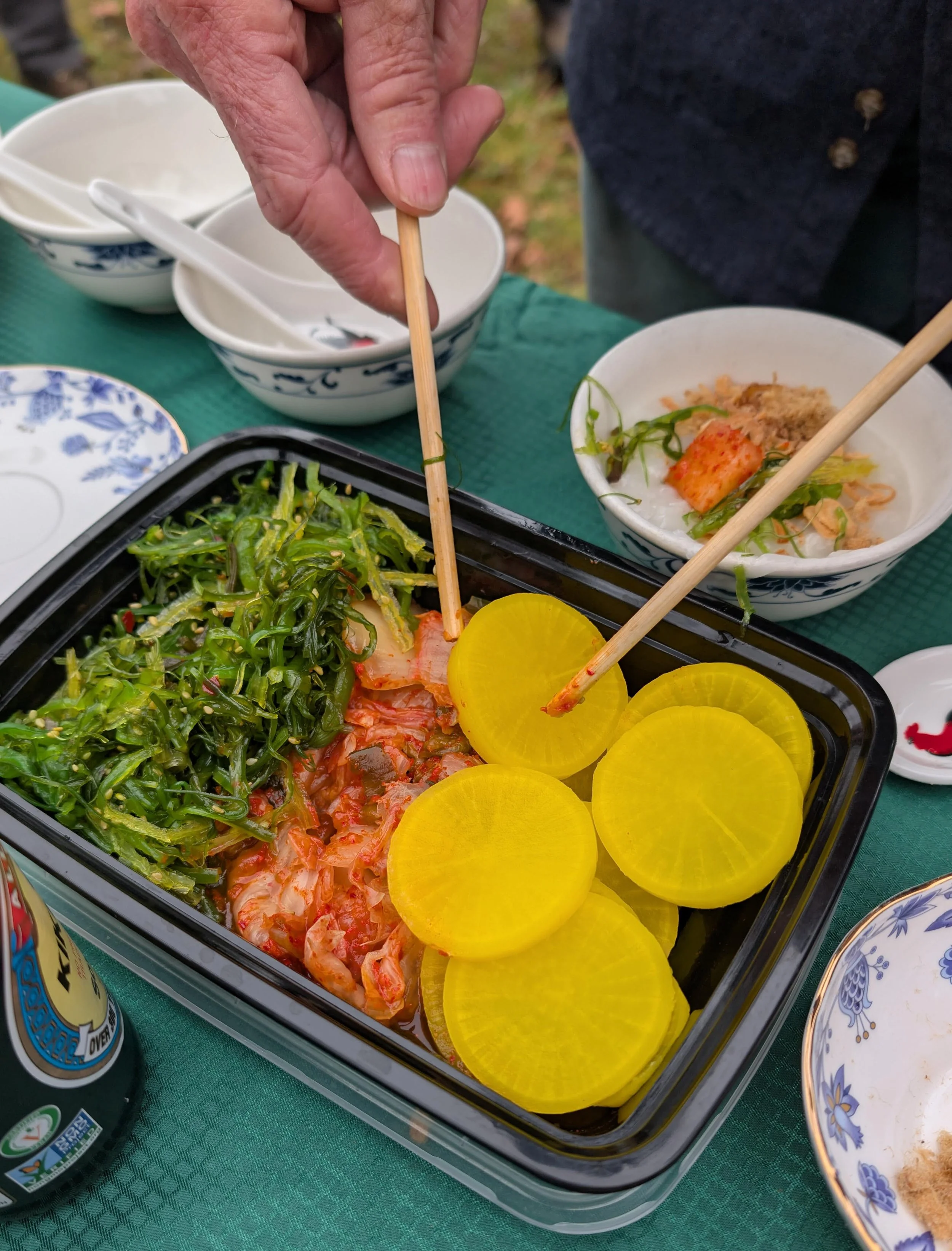
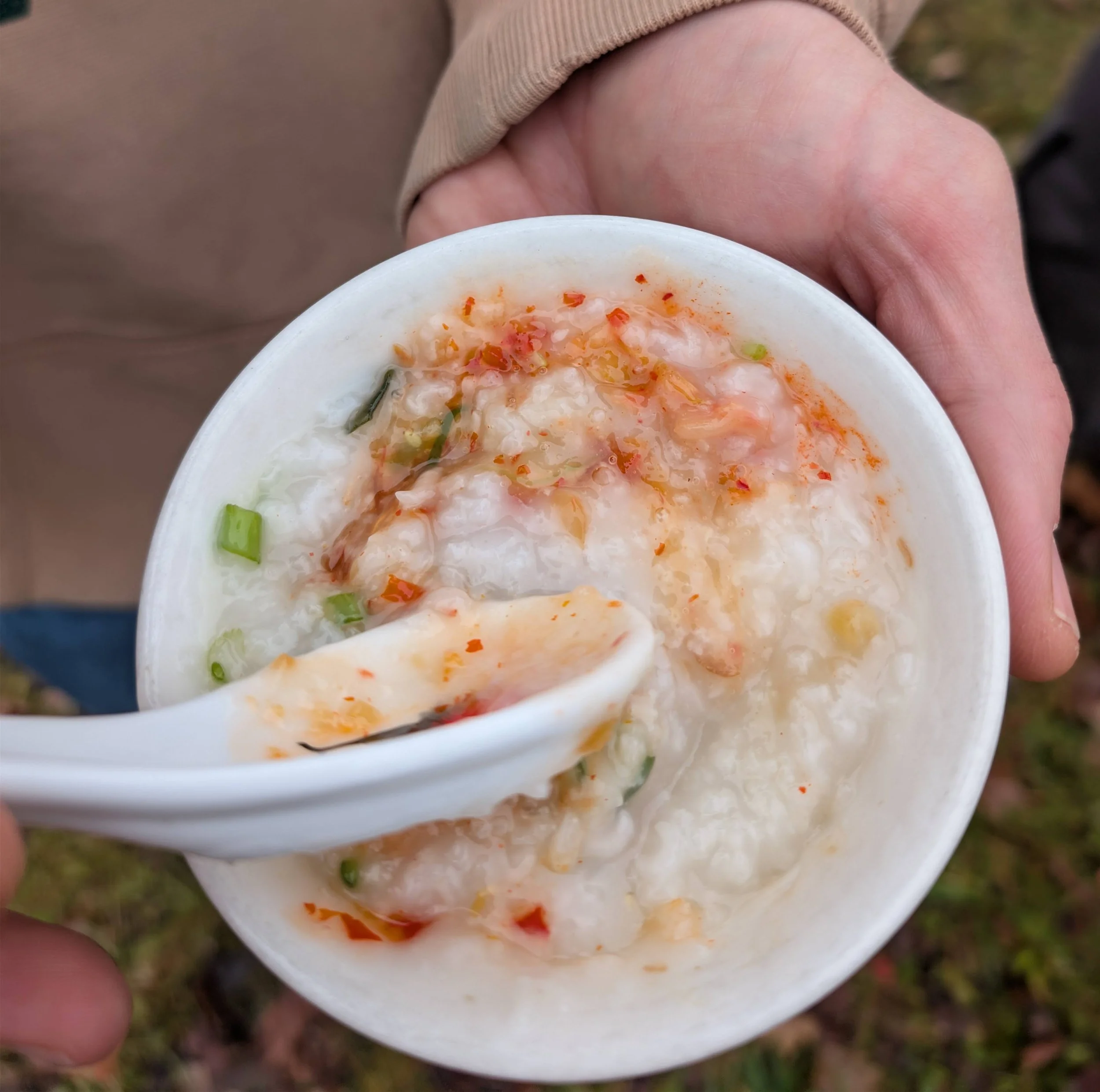
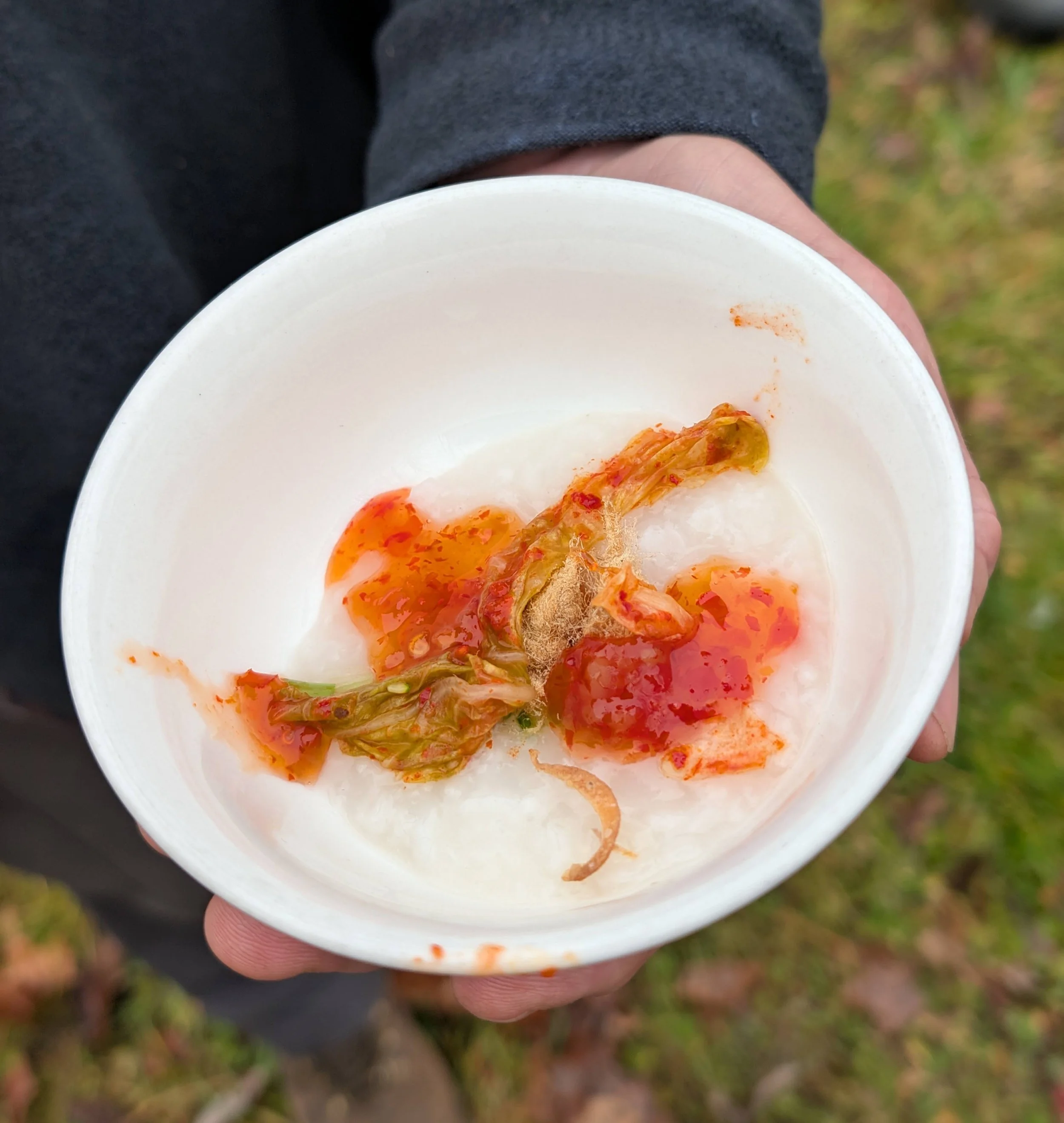
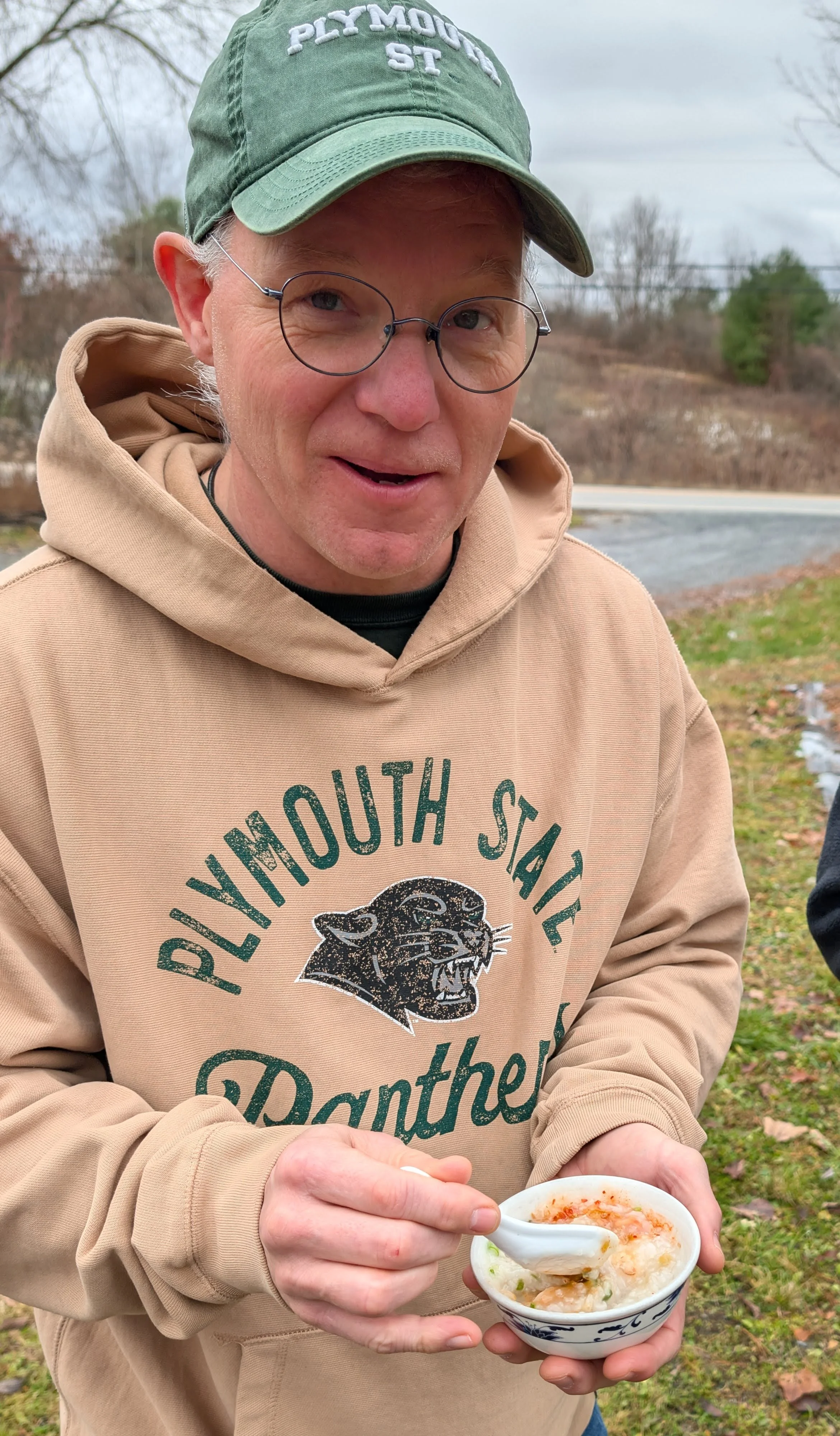
Rice porridge, cooked with chicken broth and sliced ginger, served with garnish and accompaniments: sliced scallions, fried onions, fried pork, sesame oil, pickled daikon, seaweed salad, and Korean Kimchi.
Chinese Rice Porridge (Congee) Recipe
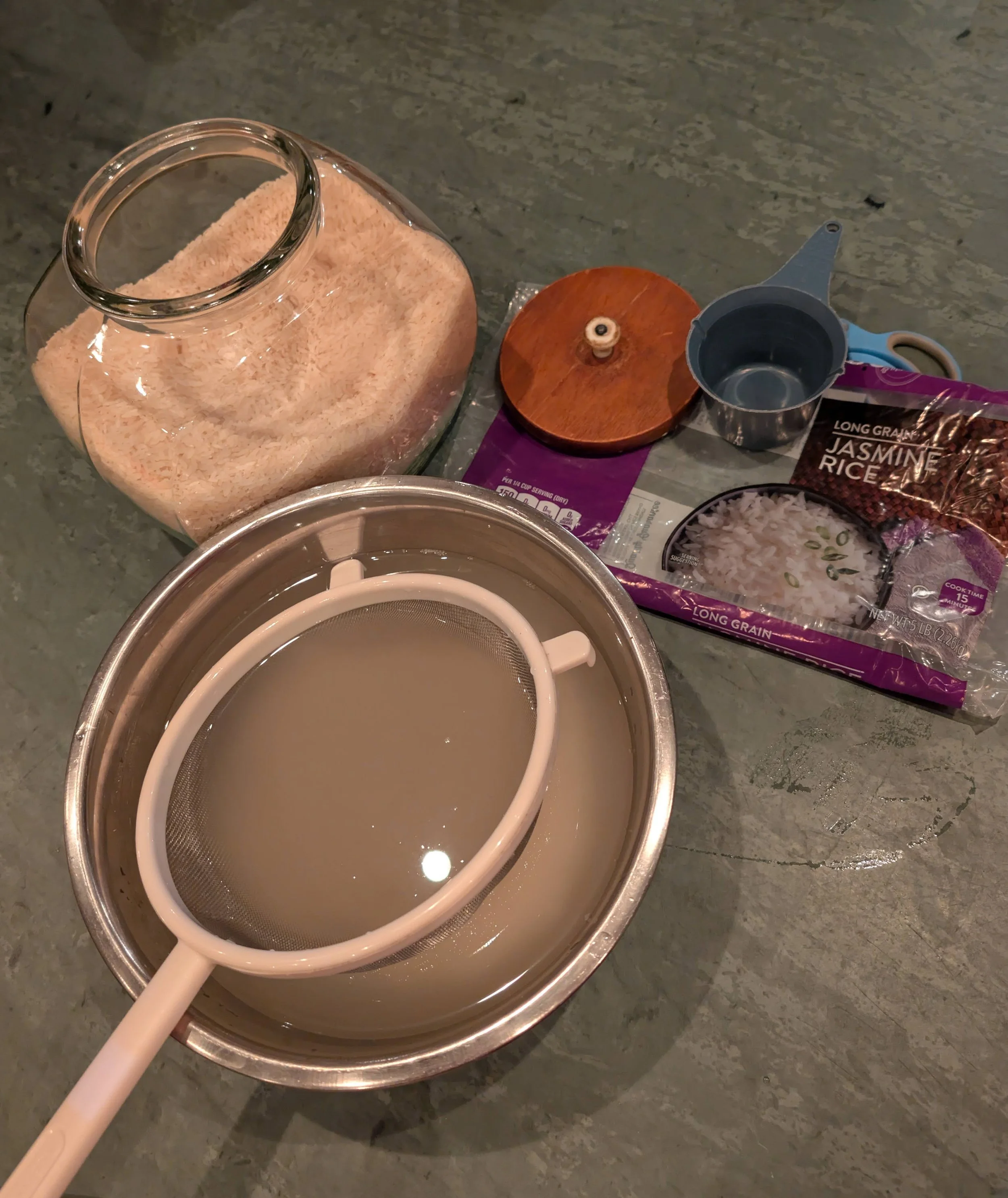
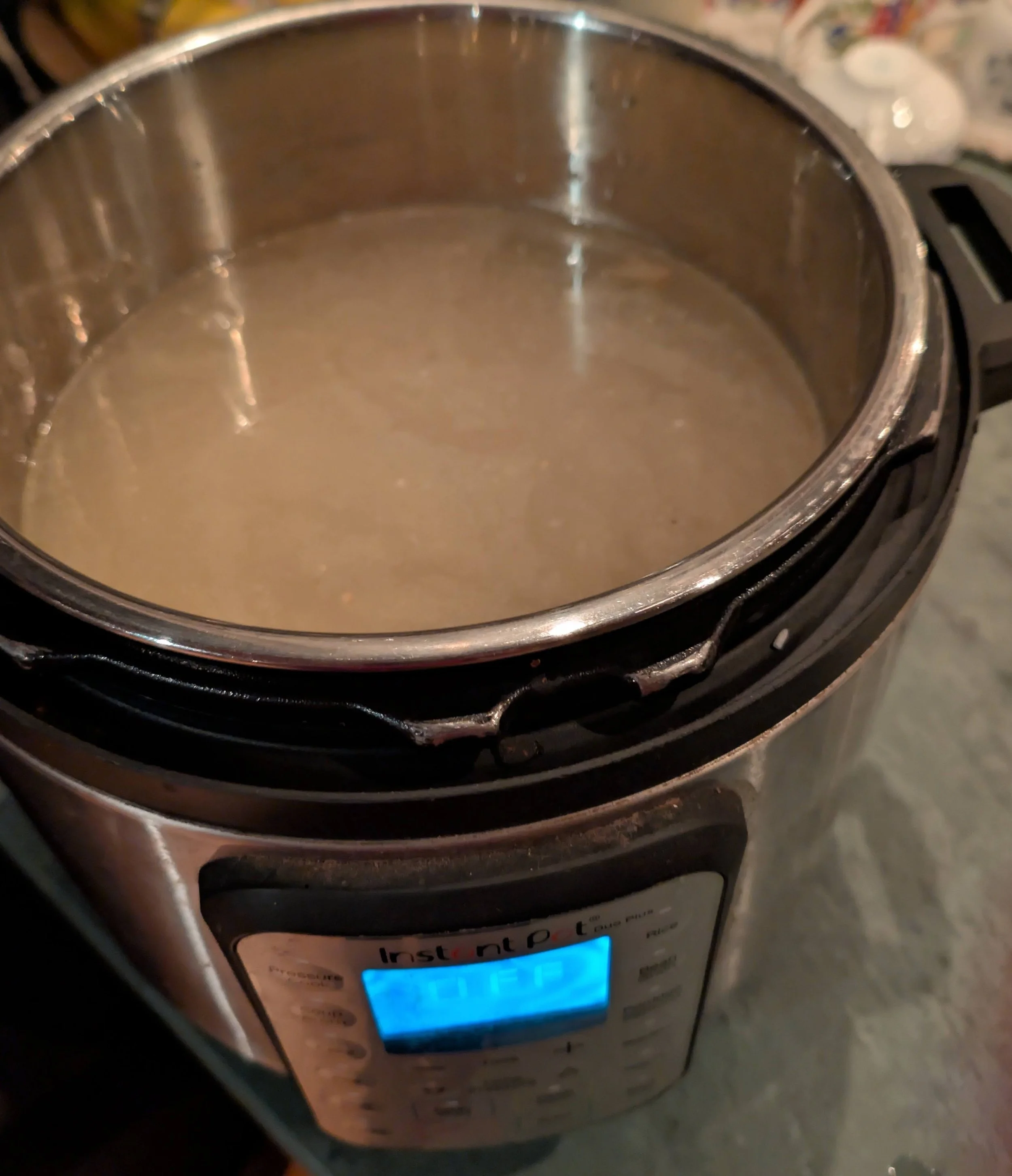
Prepare by rinsing 2 cups of medium or long grain white rice or Jasmine rice, return the rinsed rice to a bowl, and fill with water to soak for 20 minutes. Add soaked rice and 20 cups of Chicken Broth, or a mix of broth with water, and 10 peeled and sliced pieces of ginger. Cook for 20 minutes High Pressure in Instant Pot. For stovetop, bring to boil, hold at simmer, cover and cook for 1 hour (Phelps, 2026).
Filipino Egg Rolls or Beef Lumpia:
Family, Community, and Readiness
The second food story is a cultural connection about family, community, and readiness.
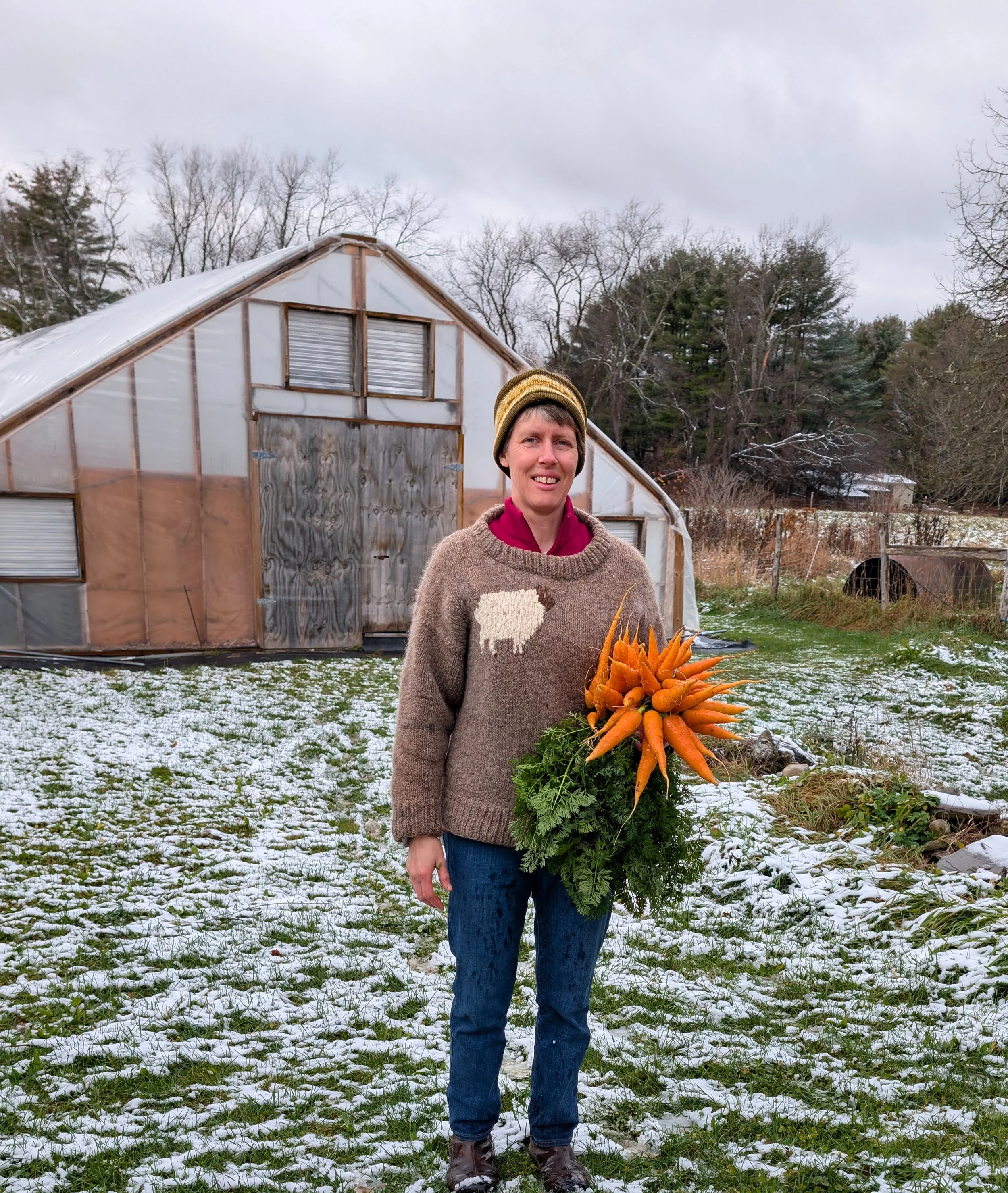
We're friends with a Filipino family, and the mother, Evelyn, helped me by sharing her favorite spring roll wrappers and giving me recipe ideas. She also made a batch for us since she knows they’re my son’s favorite.
Families and communities learn how to eat from their culture. (Bryant, 2004).
Laging Handa: Always Ready
Recently, the father, Ryan, gave a sermon at church about ‘Laging Handa’ (the motto of the Boy Scouts of the Philippines, similar to the Boy Scouts of America’s motto ‘Be prepared ’ (US Scouting Project, n.d.)), which means ‘always ready’.
This is like our Whe Chun training to observe, evaluate, and respond. One of our stances is hysocotu, and when we practice kata forms, we move into hysocotu as the ‘ready’ position.
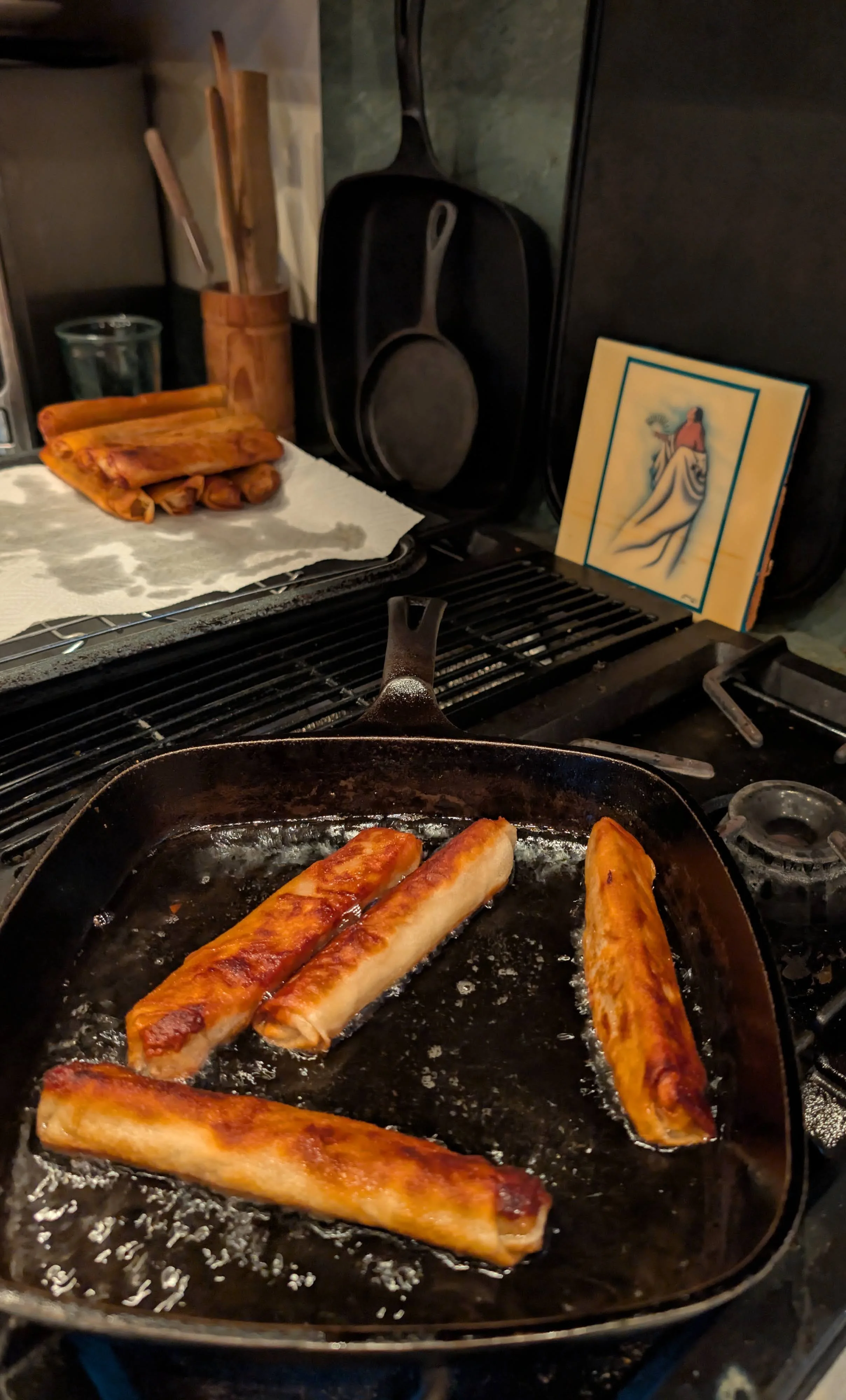
Beef Lumpia Recipe: A Make-Ahead Family Meal
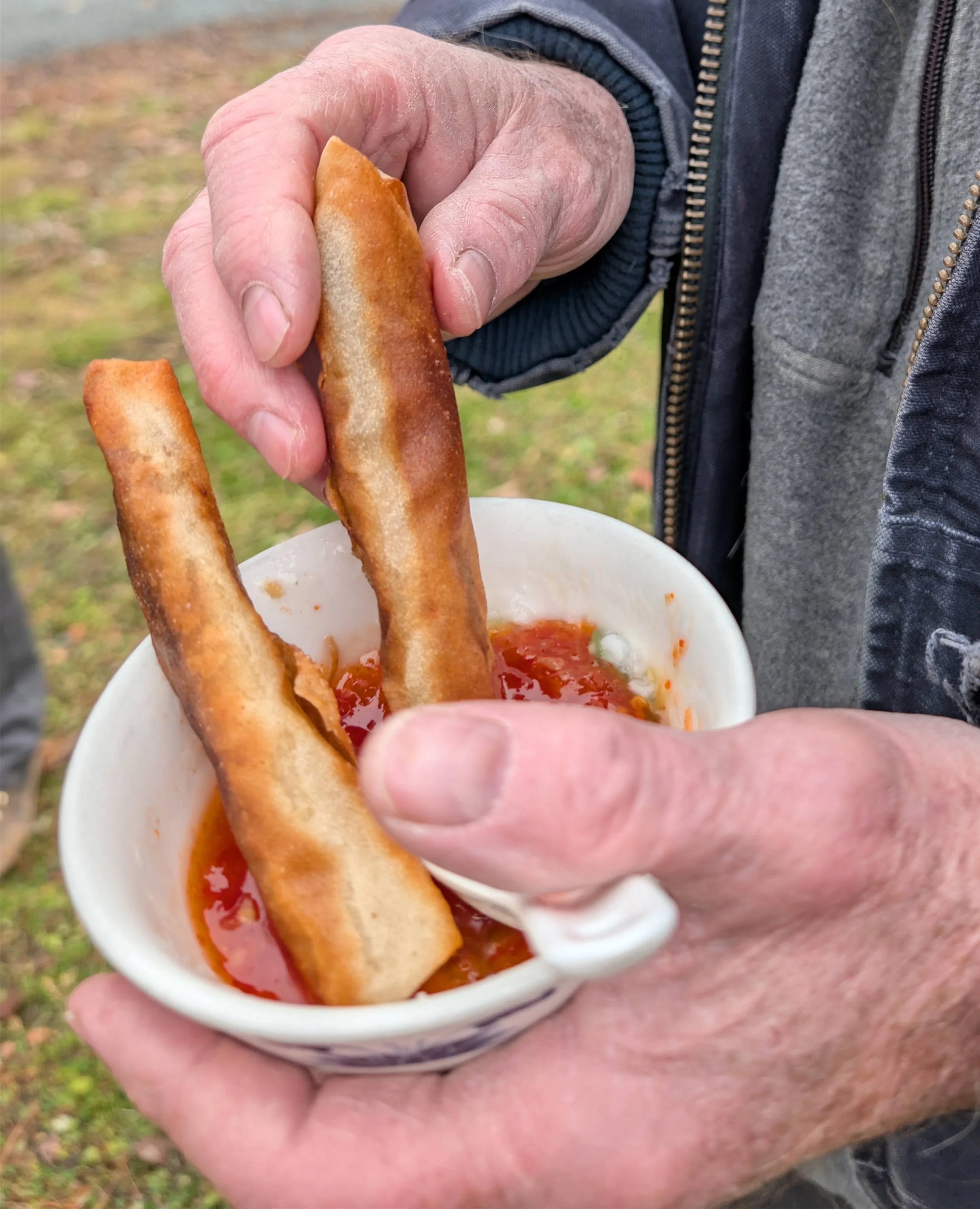
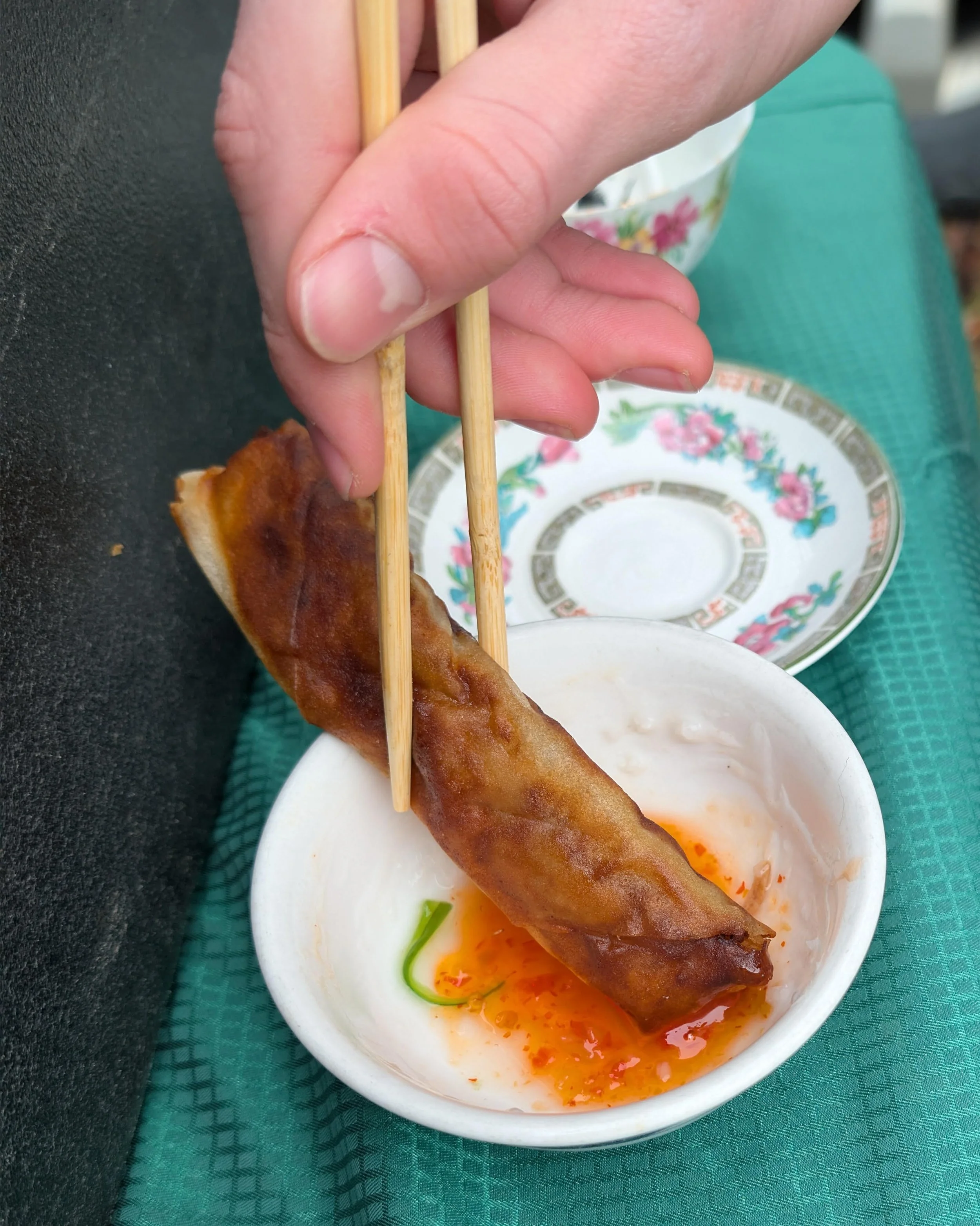
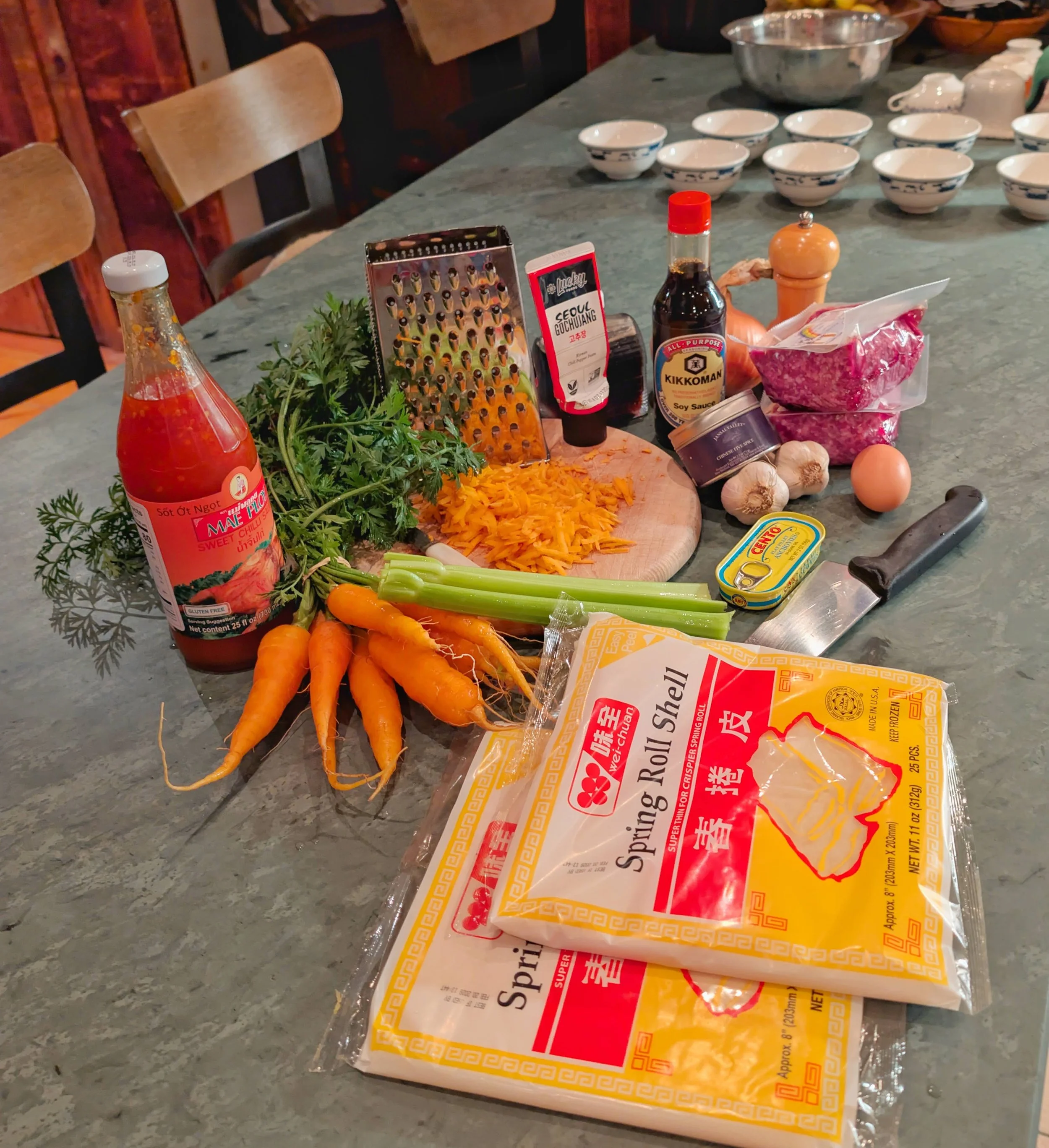
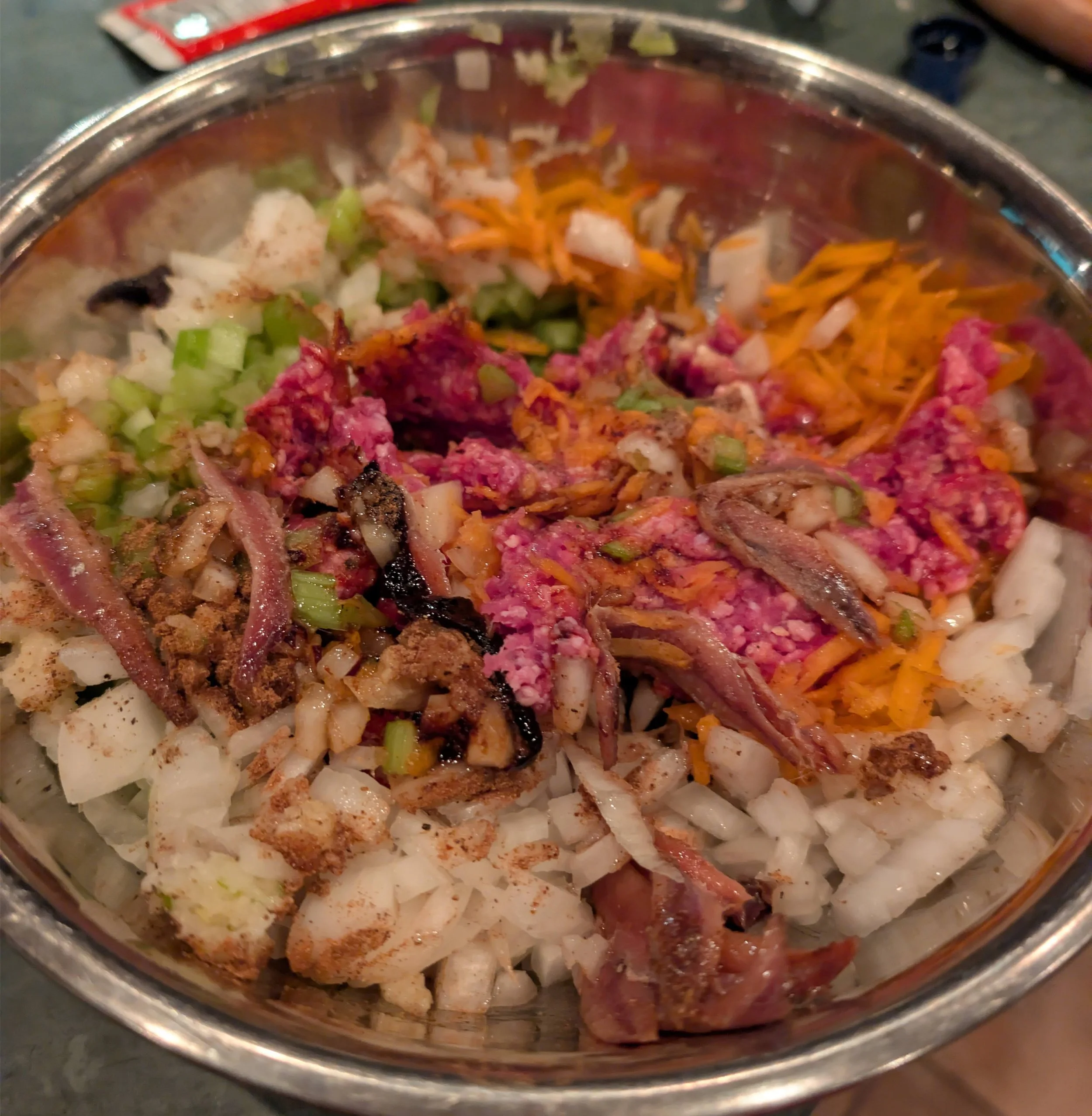
Beef Lumpia: Filipino spring rolls, SVTFarm ground beef and carrots, Old Gates Farm garlic and onion, celery, egg, parsley, maple syrup, black pepper, salt, soy sauce, anchovies, Chinese Five Spice Powder (cinnamon, anise seed, black pepper, cloves, and fennel), Gochujang Korean Chili Paste
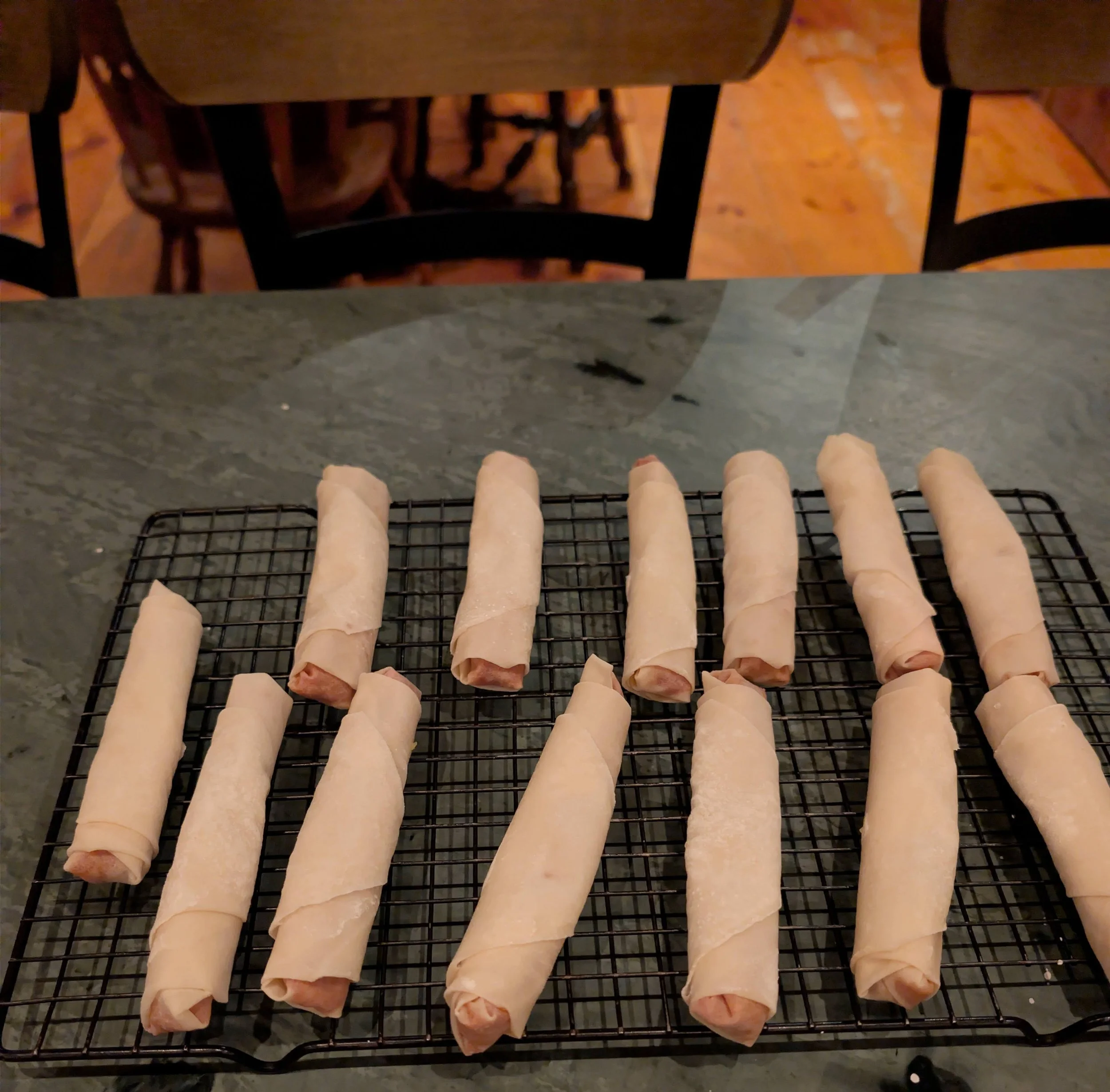
The recipe is very simple, mix all the ingredients in a large bowl. Spoon two tablespoons of filling on a spring roll wrapper laid diagonally. Shape the mixture out and roll up, tucking the ends in, leaving the endge of the triangle unrolled until you brush with water or a mixture of corn starch and water to seal, then roll up and set aside and repeat until all filling is wrapped. It’s useful to measure out the meat into balls before you start rolling so that your wrappers don’t dry out and become brittle (BadSaint, 2023).
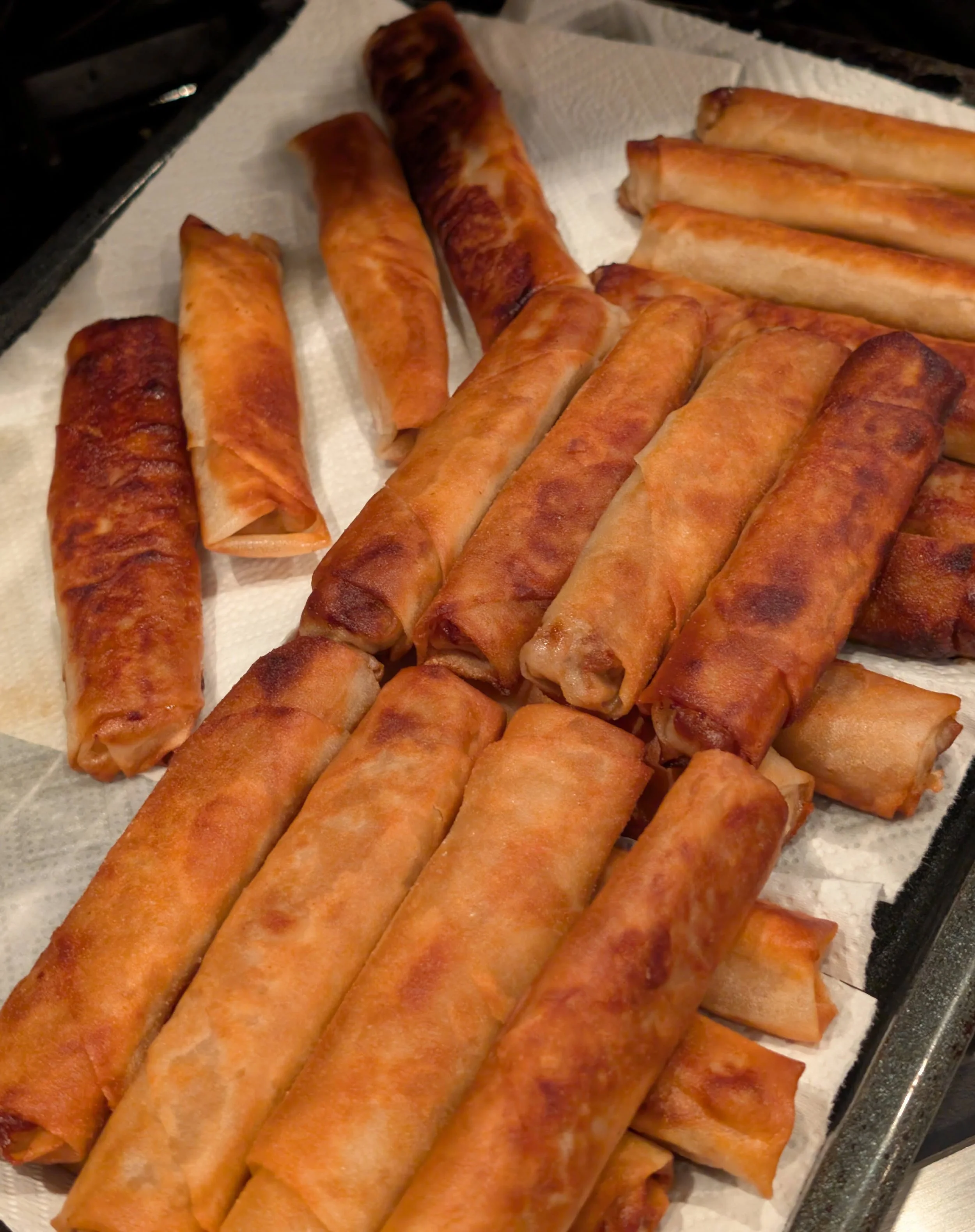
These beef lumpia egg rolls are a nutritious, satisfying food to have ready and freeze well for kids to make themselves.
Passion Fruit Juice: Recovery and Connection
Nourishment, Conversation, and Reflection
Our third food story is about the culture of training stories Sensei shares in the dojo library.
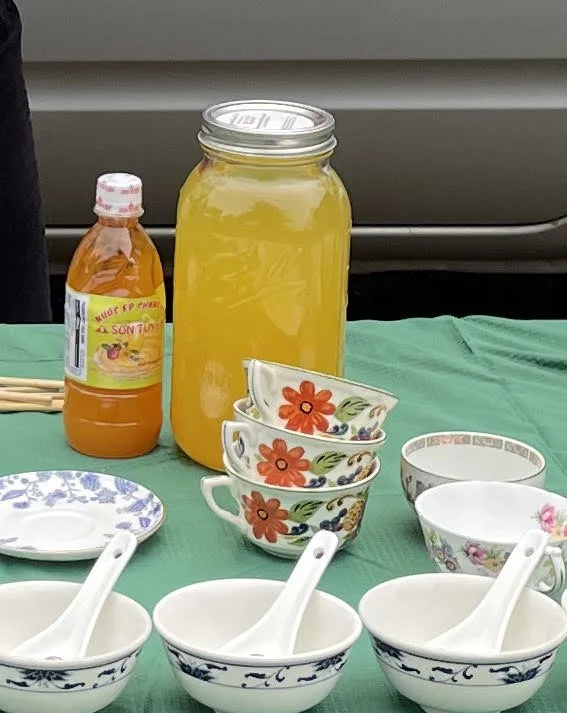
One I enjoyed was Joe Hyman's book Zen in the Martial Arts. The story Do Not Disturb takes place at Bruce Lee’s home in California, where, after a workout, the author, Bruce Lee, and Sterling Silophant share juice and sit to talk (Hyams, 1979).
Juice provides fluid and carbohydrates. Physically replenishing the body with juice is a biological connection. Sharing stories and completing After Action Reviews (AAR) build cultural connection and are useful for making improvements.
What Food Teaches Us Beyond the Dojo
Whether you’re interested in martial arts and nutrition, curious about Asian food traditions, or interested in the relationship between food, culture, and the environment, I’m here to help.
It’s been a joy to bring together my experience as a martial arts student, farmer, and undergraduate student to give you something to eat, something to learn, and something to think about.
What food traditions do you have, and what do they hold about your people and places where you share them?
References:
BadSaint. (2023, February 26). FILIPINO BEEF LUMPIANG | BEEF SPRING ROLLS | CHEF BOBBY. [Video]. YouTube. https://www.youtube.com/watch?v=BtLVHIf1-5A
Bergen, T. (n.d.). South Poultney Dojo Home. https://www.southpoultneydojo.com/
Betts, J. G., Young, K. A., Wise, J. A., Johnson, E., Poe, B., Kruse, D. H., Korol, O., Johnson, J. E., Womble, M., & DeSaix, P. (2013). Anatomy and physiology. OpenStax. https://openstax.org/books/anatomy-and-physiology
Bryant, C. A. DeWalt, K. Courtney, A. Schwartz, J. (2004). The Cultural Feast: An Introduction to Food and Society. Wadsworth, CENGAGE Learning.
Google. (2026, November 9). Congee. [Google Search]. https://www.google.com/search?q=congee&rlz=1C1HKFL_enUS1209US1209&oq=congee&gs_lcrp=EgZjaHJvbWUyBggAEEUYOdIBCDEyMDVqMGo5qAIAsAIB&sourceid=chrome&source=chrome.ob&ie=UTF-8
Hey Day Elite Fitness. (n.d.) Eating Like Bruce Lee. https://heydaytraining.com/eating-like-bruce-lee/
Hyams, Joe. (1979). Zen In The Martial Arts. Bantam Books.
OpenAI. (2026, November 17). Explaining aerenchyma in rice roots [Generative AI chat]. ChatGPT. https://chatgpt.com/share/6afd0d21-6000-83ea-b82a-
OTR Food & History. (2024, April 24). The epic story of rice: Gods, conquests, and a food trip through history [Video]. YouTube. https://www.youtube.com/watch?v=1ivJsV1A5oU
Phelps, Caroline. (2026, January 27). Basic Congee Recipe. Pickled Plum. https://pickledplum.com/basic-congee-recipe/
Shaolin Temple Europe. (n.d.). Temple Experience. https://www.shaolintemple.eu/index.php?page=monastery-on-time
US Scouting Project. (n.d.). Scout oath, law, and motto. http://www.usscouts.org/advance/ScoutsBSA/oathlaw.asp
Yamauchi, T., Shiono, K., Nagano, M., Fukazawa, A., Ando, M., Takamure, I., Mori, H., Nishizawa, N. K., Kawai-Yamada, M., Tsutsumi, N., Kato, K., & Nakazono, M. (2015). Ethylene Biosynthesis Is Promoted by Very-Long-Chain Fatty Acids during Lysigenous Aerenchyma Formation in Rice Roots. Plant Physiology, 169(1), 180–193. http://www.jstor.org/stable/24806391