
As the weather warms and fresh greens begin to grow, heavy winter soups fade out of the kitchen.
Spring is the perfect time to make stock, clear your freezer, and prepare for lighter, nourishing meals using bones, vegetable scraps, and basic ingredients that are usually tossed out.

It’s a season of transition on the farm and at home.
Freezers still hold bones, herbs, and saved vegetable scraps from winter storage, while new harvests — garlic, greens, peas, and garden vegetables — are just around the corner.
That’s why it’s a pretty good time to make stock to use what you already have, clear space, and prepare for lighter, nourishing spring meals ahead.
Check out this guide I put together for you with simple, practical ways to cook with farm-fresh ingredients including My Favorite Lamb Salad.
How I Learned to Make Stock
I’m blushing a little when I tell you this because an old boyfriend showed me how to make my first homemade stock.
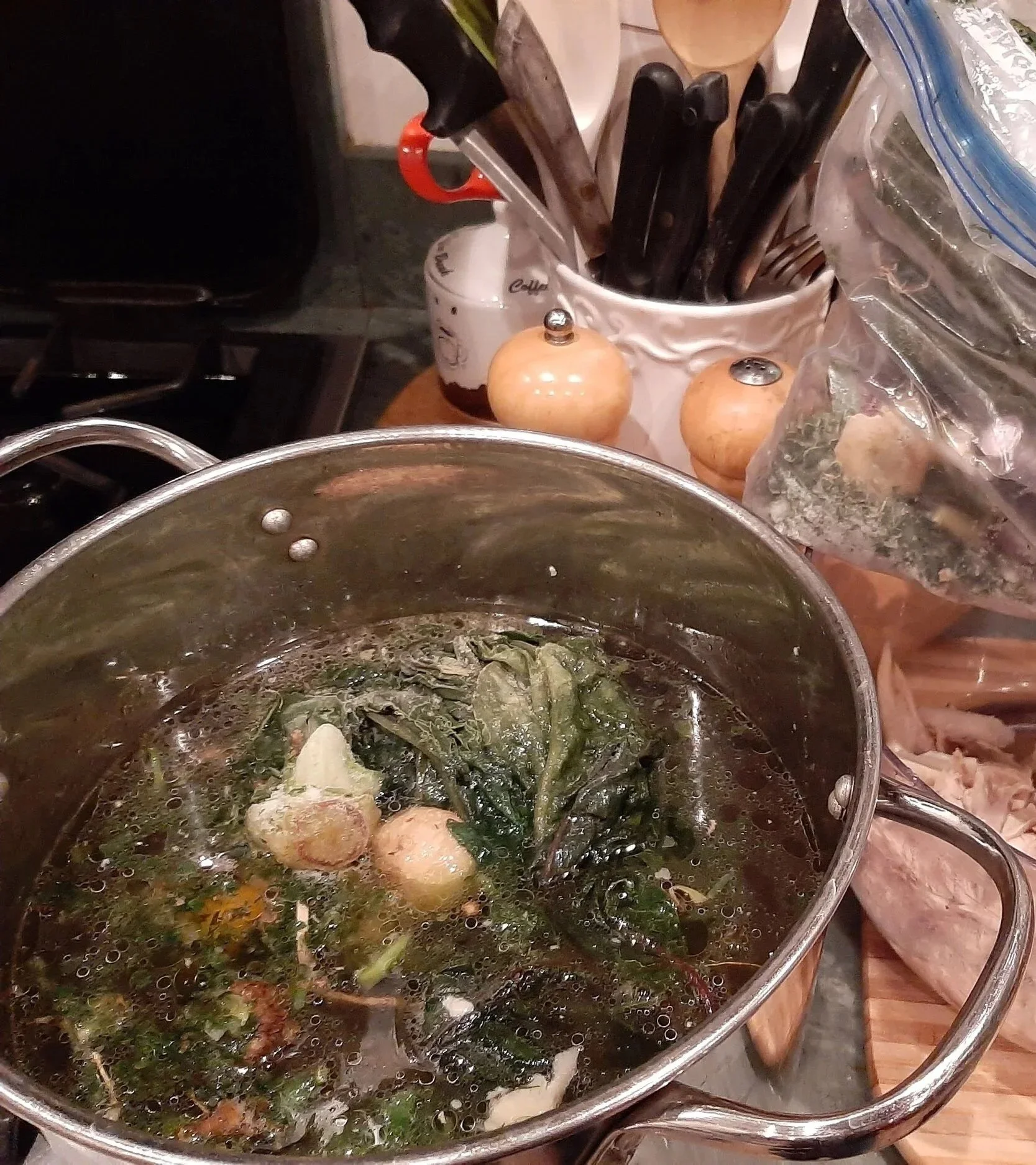
He made the most fabulous Cacciatore, and I remember thinking he was a little crazy for putting the onion tops, carrot ends, and all the other vegetable scraps in a stockpot and covering it with water.
As I watched, I thought, “What’s he doing?”
But when I tasted it...
Rich, comforting, full of flavor in a way I hadn’t experienced before.
I knew I was embarking on a new cooking adventure.
I was surprised something so simple made such a difference.
It changed how I thought about food.
I started saving scraps like vegetable skins, peels, and trimmings in a bag in my freezer.
Even bones.
Over time, making stock became part of how I cook and care for the food we raise at SVTFarm.
Adding bones to a pot, tossing in garlic papers and onion skins, left to simmer through the afternoon while doing chores, answering emails, or working in the garden.
It’s fulfilling when I build up the value of my food.
Using every part respects the animal, the harvest, and the effort that goes into growing and raising food. It helps us live the kind of farm-fresh life we want for our families and community.
And spring is one of the best times to do it.
It clears out the freezer, reduces waste, and gets me ready for another season about to arrive.
This is why I keep making stock — it turns what we already have into something rich and nourishing.

Homemade stock becomes simple meals like this — warm, grounding, and ready when there’s work to be done.

Minced garlic, heated in butter
2 tbsp ham drippings
4 c stock
2 cross cut slices of fresh ginger
1 dried whole cayenne pepper
2-3 cups cooked butternut squash
1 tsp ramp and nettle miso paste
To serve-
2 tbsp applesauce in bottom of bowl
1-1/2 cups soup puree
Top with 1 tbsp sour cream
And buttered croutons
Mmmmmm
Why Spring Is the Perfect Time to Make Farm Stock
Homemade stock is an easy method of layering on nutritional value with leftovers slated for the chickens, compost pile, or trash.
You can turn bones and scraps into something useful making room for fresh seasonal harvests ahead.
Making stock in spring is practical and frees up space in your kitchen ready to step into the new season by:
Clearing freezer space for upcoming harvests
Utilizing minerals and vitamins from bones and vegetable scraps
Reducing food waste
Preparing nourishing bases for light spring soups
Creating simple, practical, farm-fresh cooking
This is how we live on the farm: using what we have and Getting ready for what’s next.
Every Soup Starts with Stock
Stock creates the flavor, the nourishment, and the foundation for simple meals.
It turns leftover ingredients into something useful and comforting.
This means fewer last-minute decisions and routinely having more nourishing food ready.
A Beginner’s Checklist For Making Stock
Making fresh stock uses all the peels and scraps leftover from making something else, like Chicken Cacciatore.
As a busy mom who didn’t have time or energy to dirty up the kitchen on a weeknight, I needed a way to make this simple and realistic.
Save your scraps and freeze them.
Then, when you’re free to make stock, you have everything already.
Add these ‘stock bags’ to a large pot, cover with water, and bring to a simmer.
You can keep:
Beef, chicken, or lamb bones
Vegetable scraps
Cheese rinds
Herb stems
Leftover meat pieces
Anything that adds flavor can go into the stockpot.
Turn forgotten leftovers and waste into budget-friendly bases for noodles, risotto, and soup.
Making Easy Kitchen Stock
This takes little attention or effort.
Ingredients
Bones (beef or lamb if available)
Vegetable peels and trimmings
Water
Small glug of vinegar (if using bones)
Salt to taste
Instructions
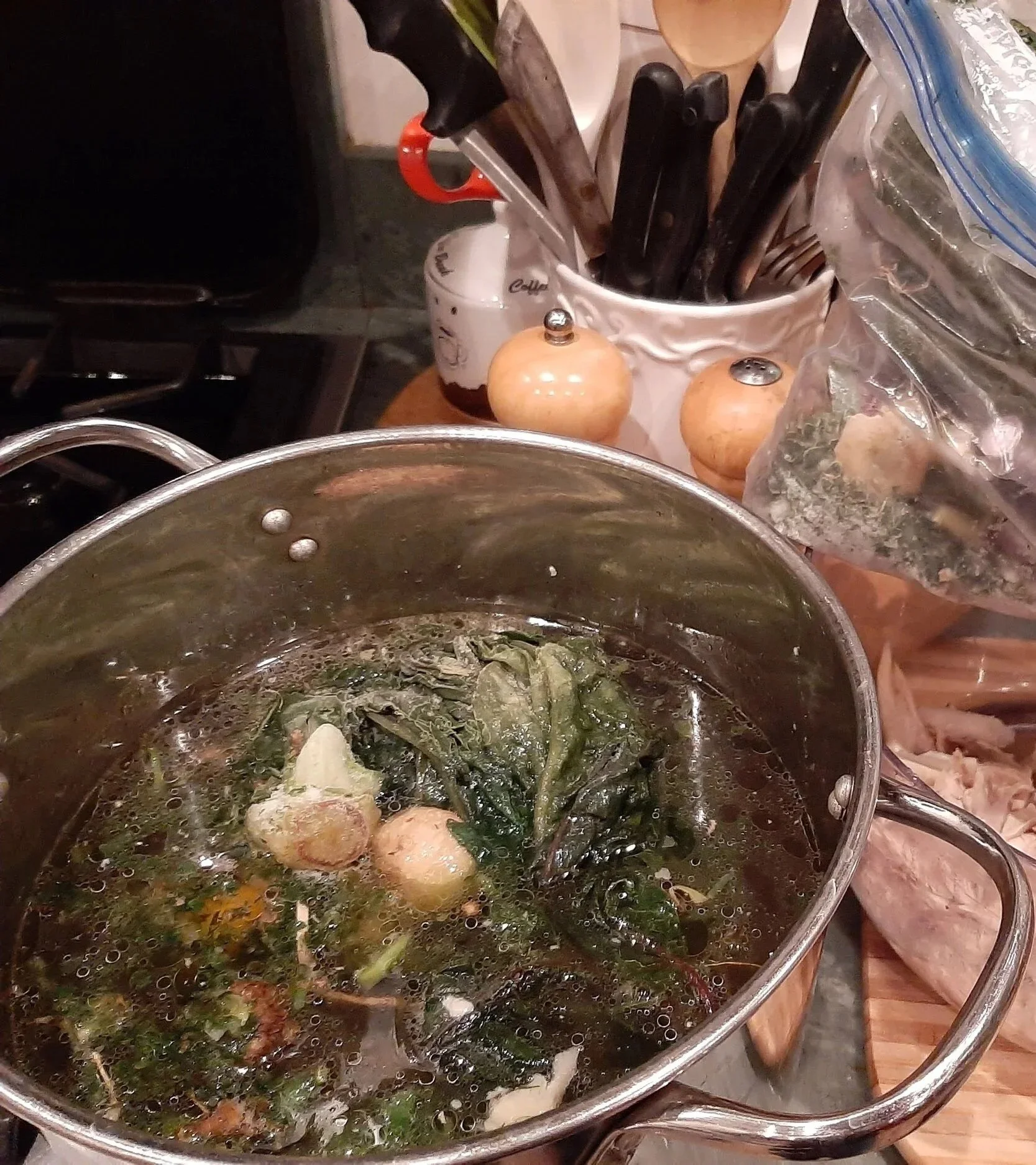
Fill your stock pot with bones and vegetable scraps.
Add a small glug of vinegar to help release minerals from the bones.
Cover everything with water.
Bring to a gentle boil, then reduce to a low simmer.
Simmer for at least 30 minutes (4–6 hours for deeper flavor; just let it simmer while you go about your day.)
Cool slightly and strain.
Use immediately or freeze for later.
Yield 4-6 Quarts
How To Make Stock
Turn bones and vegetable scraps into farm stock for light Spring dishes.
Storing Your Stock
Stock stores easily and becomes a reliable kitchen staple.
Storage Options
Glass jars in the refrigerator (3–4 days)
Freezer-safe containers
Ice cube trays for small portions
Label and date with a marker so you know what you have when you're making quick meals.
Having stock on hand saves money, makes cooking more nutritious, and comes together quickly for busy days.
Using Stock for Light Spring Meals
When spring flowers and sunshine arrive, our meals naturally become lighter and fresher.
Homemade stock works beautifully for:
Spring greens broth
Use these standards to lighten up your meal plan.
Fresh greens, garlic, and seasonal vegetables pair perfectly with a simple stock base.
Switching from dense winter cooking to fresh spring celebration is easier with your own flavorsome stock.
Build a Simple Farm Fresh Cooking Routine
Making stock is about more than soup.
It’s about a rich life with basic food routines that make it easier for you.
One morning of simmering stock can create:
quick soup bases
easy weeknight options
nourishing food ready to go
Less stress in the kitchen.
More time outside.
More connection between your health and meals.
Farm-fresh living in everyday life is simple, practical, and rooted in seasonal rhythms.
A Simple Way to Start
You don’t have to do everything at once.
Start with one small step.
Save your scraps to make stock.
Pick a morning to cover them with water.
Let it simmer.
Now you’re doing it.
Sustainable and local eating grows one delicious bite at a time.
Want More Simple Farm-Fresh Cooking Ideas?
If you want more simple ways to bring local meat, eggs, and garden vegetables into your daily routine, the Farm Fresh Food Guide is a good place to start.
It’s designed to make your cooking practical and simple.
You can download it and begin building easy seasonal meals right away.
Download the Farm Fresh Food Guide and start building simple, seasonal meals today.
Take care,
Laura
SVTFarm